Intermodal container
An intermodal container — also called a shipping container, freight container, or, in US military terminology, a MILVAN — is a large standardized steel enclosure engineered to carry cargo across multiple modes of transport, including ships, trains, and trucks, without the need to unload and reload the goods at each transfer point. The design underpins the global containerized intermodal freight transport system and exists in a range of types suited to different cargoes.
By 2011 approximately 20.5 million intermodal containers were in service worldwide, and by 2010 containerized cargo accounted for 60 percent of the world's seaborne trade, having largely displaced the traditional break-bulk cargo handling that preceded it.
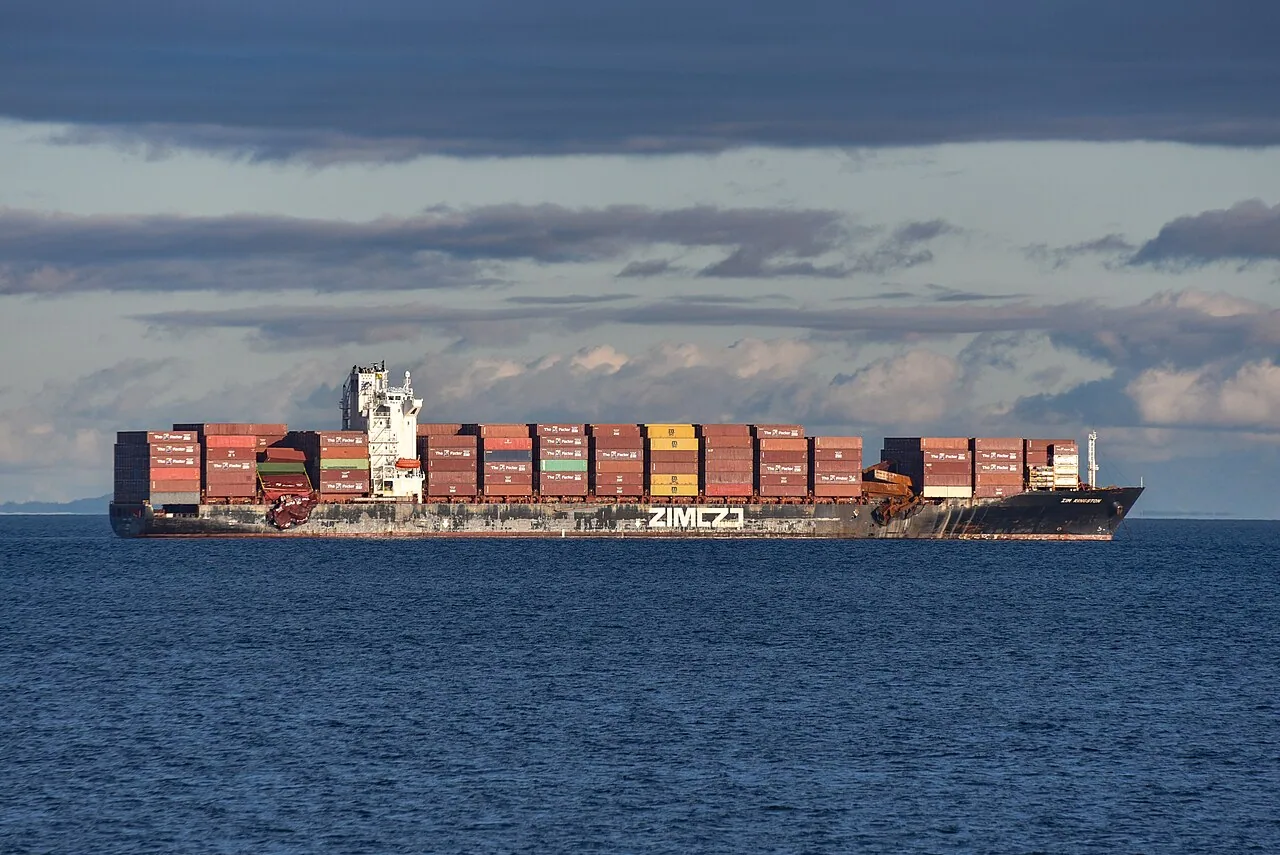
| Common names | Intermodal container, shipping container, freight container, MILVAN (US military) |
| Primary material | Rust-retardant weathering steel |
| Standard lengths | 20 ft (6.1 m) and 40 ft (12.2 m) |
| Standard width | 8 ft (2.4 m), nearly universal across fleet |
| Standard heights | 8 ft 6 in (2.6 m) standard; 9 ft 6 in (2.9 m) High Cube (HC/HQ) |
| Governing size standard | ISO 668:2020 |
| Container identification | Unique ISO 6346 reporting mark on each unit |
| Fleet composition | 90% dry freight / general-purpose containers |
| Global fleet size (2011) | Approximately 20.5 million units |
| Share of world seaborne trade (2010) | 60% |
What is an intermodal container?
An intermodal container is a durable, closed rectangular steel box built to transfer between transport modes — ocean vessel, rail wagon, and road truck — without its contents being disturbed. This single characteristic, the elimination of cargo rehandling at each modal junction, defines its purpose and its economic value within global supply chains.
The vast majority of containers in the world fleet, roughly 90 percent, are dry-freight or general-purpose units: sealed steel boxes resistant to rust, almost universally 8 feet wide, and either 20 or 40 feet in length. Like pallets and cardboard boxes, containers function as a means of bundling goods into unitized loads that handle efficiently, stack reliably, and pack tightly aboard ships or within storage yards.
Each container carries a unique identifier governed by ISO 6346, ensuring traceability across the global logistics network. The capacity unit most widely used in the industry is the TEU, or twenty-foot equivalent unit, derived directly from the 20- and 40-foot standard dimensions.
Sizes, types and standards
The dimensions recognized worldwide for intermodal containers are set by ISO 668:2020. The two dominant length classes are 20 feet (6.1 m) and 40 feet (12.2 m); width is standardized at 8 feet (2.4 m) across virtually the entire global fleet. Two height variants are in common use: the standard 8 feet 6 inches (2.6 m) and the taller 9 feet 6 inches (2.9 m) variant, designated High Cube or Hi-Cube and abbreviated HC or HQ.
Beyond the dominant dry-freight box, containers exist in many specialized types matched to specific cargo requirements. The term TEU — twenty-foot equivalent unit — provides a common denominator for counting fleet size and vessel capacity regardless of whether individual units are 20 or 40 feet long.
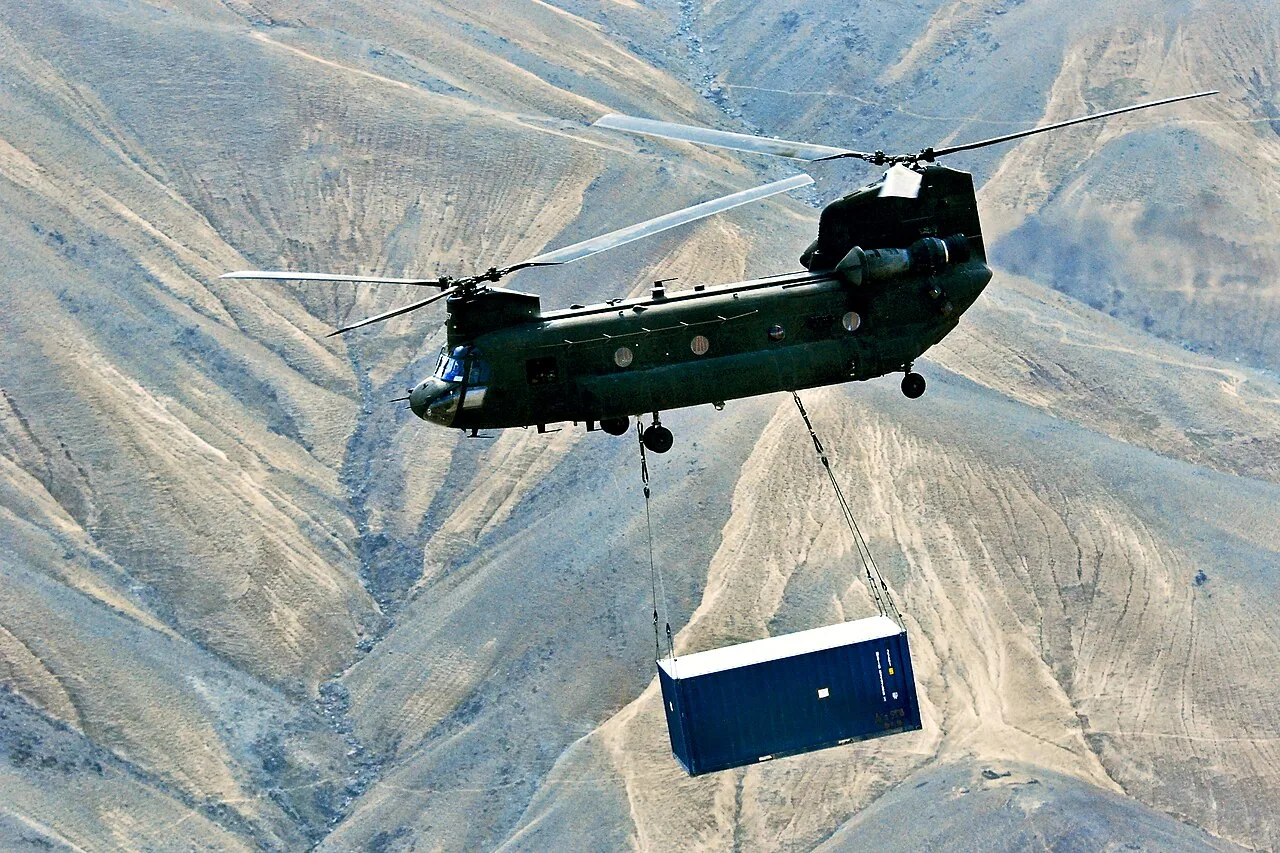
For air freight, intermodal containers are not used; the aviation industry instead employs lighter-weight unit load devices defined by the International Air Transport Association (IATA). Similarly, bulk commodities — gases, liquids, and loose solids — typically move by bulk carrier, tank ship, tank car, or bulk truck rather than in containers.
Where did containerization begin?
The underlying concept of moving goods in discrete, transferable boxes traces back to England's early coal-mining regions in the late eighteenth century. In 1766, James Brindley designed the box boat known as the Starvationer, fitted with ten wooden containers, to carry coal from Worsley Delph quarry to Manchester along the Bridgewater Canal. By the late 1780s, so-called loose boxes were being used to containerize coal on and off barges at the same canal.
In 1795, Benjamin Outram opened the Little Eaton Gangway, where horse-drawn wheeled wagons built at his Butterley Ironwork functioned as containers: loaded with coal, they were transshipped directly between the gangway and barges on the Derby Canal, a waterway Outram had also promoted. By the 1830s, British railways were transferring containers between modes, with the Liverpool and Manchester Railway using simple rectangular timber boxes to move coal from Lancashire collieries to Liverpool, where cranes lifted them onto horse-drawn carriages. Iron boxes supplemented wooden ones by the 1840s, and by the early 1900s closed containers designed explicitly for road-to-rail interchange had come into use.
How were international standards created?
The Bureau International des Containers et du Transport Intermodal established the first international container standards in 1933, with a second standard following in 1935. Both standards were oriented toward European cross-border transport; at the same time, containers operating in the United States remained unstandardized. Neither the early European nor the early American containers were designed to be stacked.
In November 1932, the Pennsylvania Railroad opened what is recorded as the world's first container terminal, located in Enola, Pennsylvania. The broader push toward containerization in both Europe and the United States gathered momentum partly as a competitive response to the economic contraction that followed the Wall Street Crash of 1929, which had sharply reduced general transport activity and placed pressure on rail operators to cut costs.
A significant postwar milestone occurred in April 1951 at Zürich Tiefenbrunnen railway station, where the Swiss Museum of Transport and the Bureau International des Containers organized demonstrations for representatives from multiple European countries and the United States. The system selected for Western Europe was based on the Dutch Laadkisten (literally 'loading chests') approach, which had been in use in the Netherlands since 1934 for consumer goods and waste transport. That system employed roller containers for rail, truck, and ship movement in configurations up to 10 feet 2 inches by 7 feet 6.5 inches by 6 feet 6.75 inches (3.1 m × 2.3 m × 2 m) and up to 12,100 pounds (5,500 kg) capacity, and it became the first post-World War II European railway container standard under the International Union of Railways designation UIC-590, known as the pa-Behälter. It was adopted in the Netherlands, Belgium, Luxembourg, West Germany, Switzerland, Sweden, and Denmark.
Mid-twentieth-century developments and the role of the US military
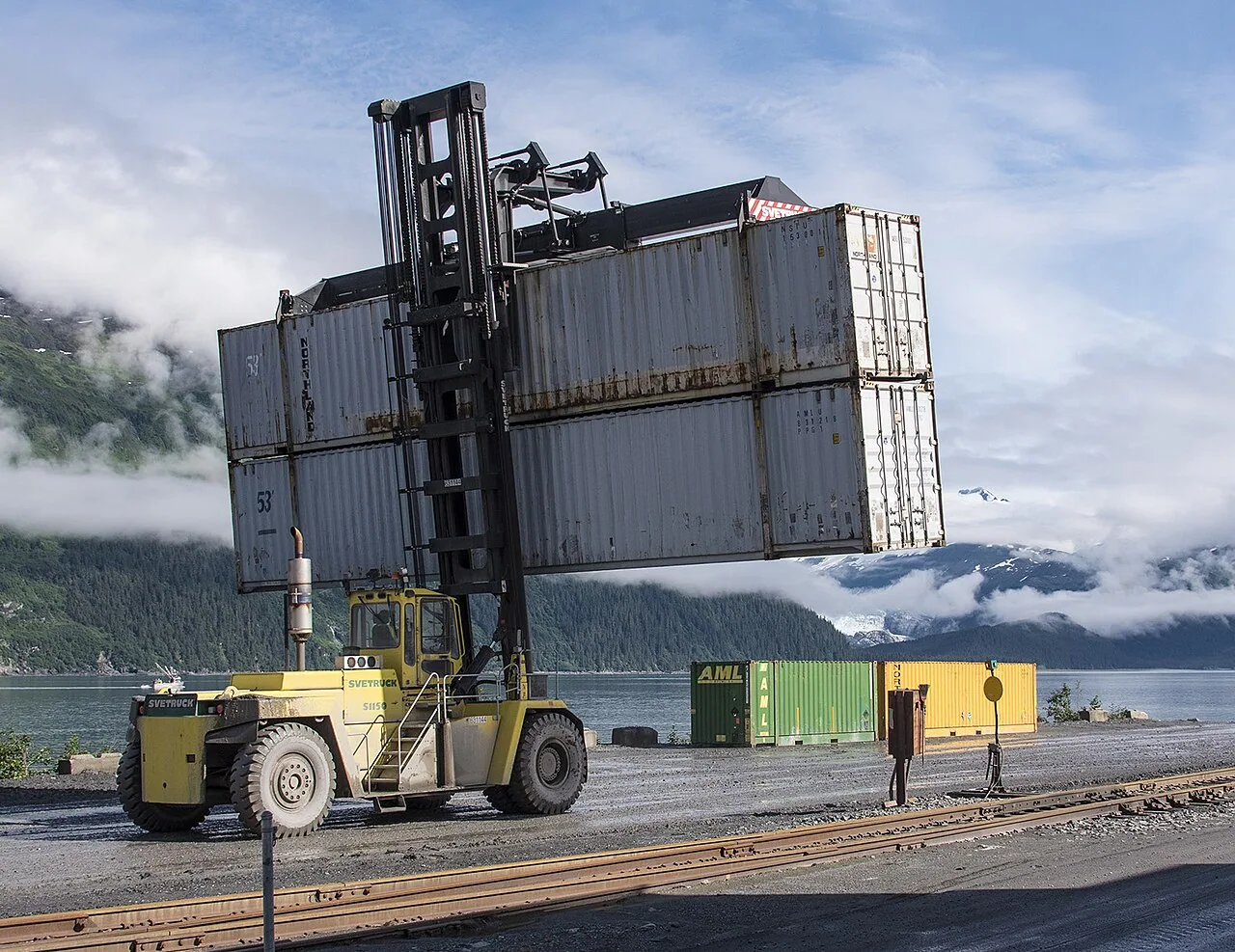
Commercial and military operators in the United States began developing standardized steel containers during the late 1940s and early 1950s. In 1948 the US Army Transportation Corps introduced a unit called the Transporter: a rigid, corrugated-steel container measuring 8 feet 6 inches long, 6 feet 3 inches wide, and 6 feet 10 inches high (2.6 m × 1.9 m × 2.1 m), capable of carrying 9,000 pounds (4,100 kg). It was mounted on skids, fitted with double doors at one end, and equipped with lifting rings at all four top corners.
After proving its value during service in Korea, the Transporter design was developed further, contributing to the lineage that led to the modern standardized steel container used globally today.
SeaLand and the proliferation of modern containers
The 40-foot intermodal container reached widespread commercial adoption during the 1960s and 1970s, driven principally by the containerization innovations introduced by the American shipping company SeaLand. SeaLand's systematic application of the standard steel box to ocean shipping transformed cargo handling and established the operational template that the industry subsequently followed worldwide.
The containerization model that SeaLand advanced displaced break-bulk cargo handling — in which individual goods were loaded and unloaded piece by piece — across a broad range of trade lanes. By 2010, containers carried 60 percent of the world's seaborne trade, a measure of how completely the technology had restructured maritime freight within roughly five decades.
Construction features and cargo compatibility
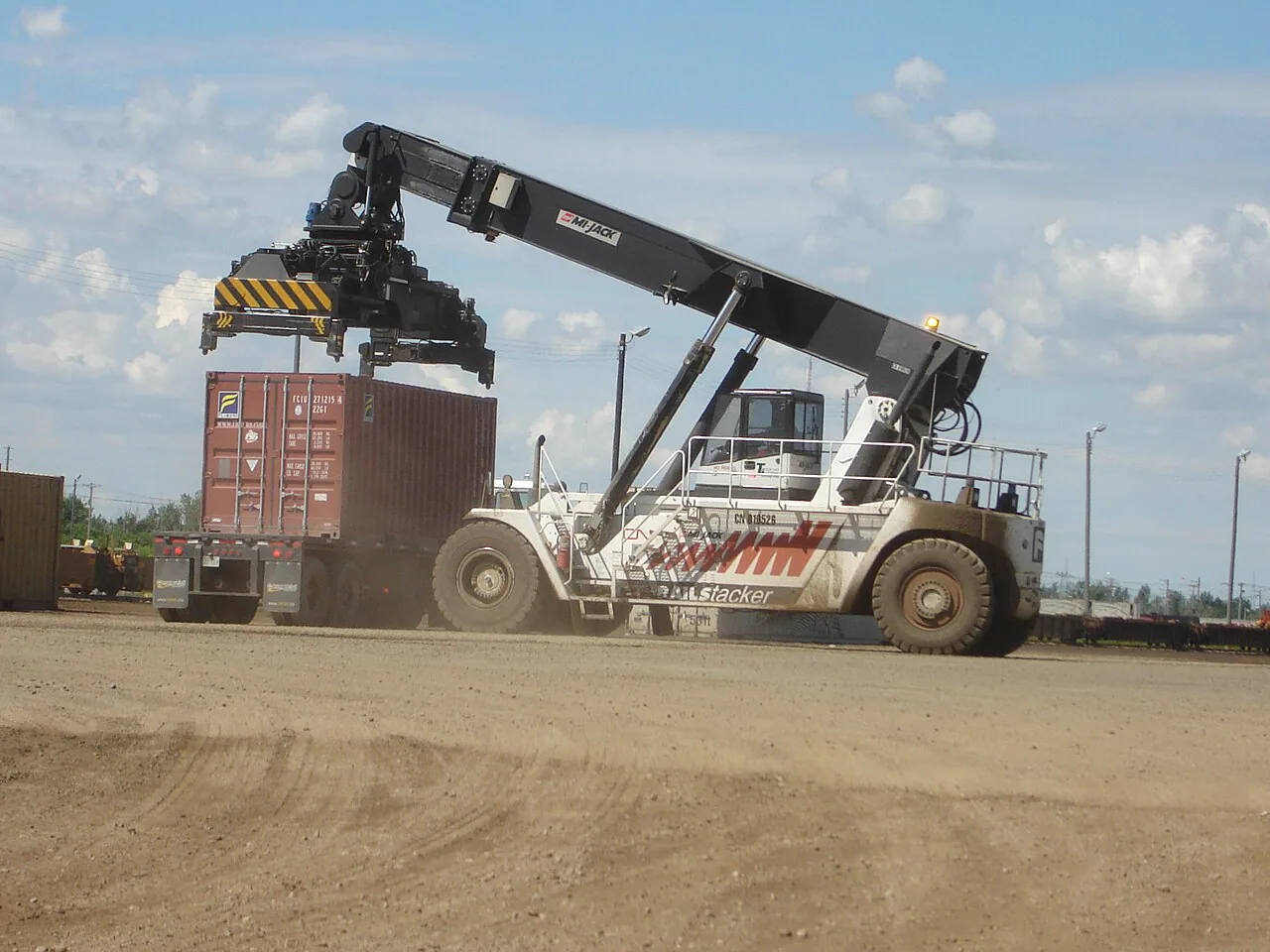
Intermodal containers share a defined set of structural characteristics that enable them to withstand the mechanical stresses of multimodal transit: the racking forces of rail movement, wave-induced ship motion, and road vibration. These shared features also ensure that containers from different owners and operators remain compatible with the same cranes, chassis, and stacking systems at any terminal worldwide.
The dry-freight general-purpose container, which constitutes roughly 90 percent of the global fleet, is a weathering-steel box whose composition resists rust over a service life spanning many years and multiple ocean crossings. The alternative transport methods for cargo that cannot move by container — bulk carriers and tank ships at sea, tank cars and bulk trucks on land — reflect the limits of the rectangular box form rather than any deficiency in its design.
Frequently asked questions
What is a TEU in container shipping?
TEU stands for twenty-foot equivalent unit and is the standard measure of container capacity derived from the dimensions of the 20-foot intermodal container. A 40-foot container counts as two TEUs. The term is used to express vessel capacity, terminal throughput, and global fleet size.
What standard governs intermodal container dimensions?
The dimensions of intermodal containers are defined by ISO 668:2020, published by the International Organization for Standardization. That standard specifies the two dominant length classes — 20 feet (6.1 m) and 40 feet (12.2 m) — along with the near-universal 8-foot (2.4 m) width and the two recognized heights of 8 feet 6 inches (2.6 m) and 9 feet 6 inches (2.9 m).
What is a High Cube container?
A High Cube container, abbreviated HC or HQ, stands 9 feet 6 inches (2.9 m) tall rather than the standard 8 feet 6 inches (2.6 m). The extra foot of internal height accommodates bulkier or lighter cargo that requires more cubic volume without exceeding weight limits. High Cube units share the same 20- or 40-foot lengths and 8-foot width as standard containers.
How many intermodal containers were in use worldwide as of 2011?
Approximately 20.5 million intermodal containers of varying types were in service globally in 2011. The fleet included units designed for different cargo types, though dry-freight general-purpose boxes accounted for about 90 percent of the total. By 2010, containers handled 60 percent of the world's seaborne trade.
Who invented the modern shipping container?
The concept of moving goods in transferable boxes dates to eighteenth-century England, where James Brindley used wooden containers on the Bridgewater Canal as early as 1766. The standardized steel container in its modern form emerged from US military and commercial development in the late 1940s and early 1950s, and it was the American company SeaLand that drove widespread adoption of the 40-foot steel container during the 1960s and 1970s.
What was the world's first container terminal?
The Pennsylvania Railroad opened what is recorded as the world's first container terminal in Enola, Pennsylvania, in November 1932. At that time, neither American nor European containers were standardized for stacking, and the terminal predates the modern steel box by roughly two decades. Its opening coincided with industry efforts to make rail transport more competitive following the economic disruption of the Wall Street Crash of 1929.
How is each intermodal container individually identified?
Every intermodal container carries a unique reporting mark assigned under ISO 6346, allowing individual units to be tracked and identified throughout the global transport network. This standardized coding system applies regardless of the container's owner, operator, or flag of registration. The mark is physically displayed on the exterior of the container.
Are intermodal containers used in air freight?
Standard intermodal containers are not used for air freight because their steel construction makes them too heavy for aircraft payload constraints. Aviation cargo instead uses unit load devices defined by the International Air Transport Association (IATA), which are lighter and shaped to fit aircraft fuselage profiles. The intermodal container's advantages apply specifically to sea, rail, and road transport.
Sources
- Wikipedia: Intermodal container — Factual basis of this entry