Bulk carrier
A bulk carrier, also called a bulker, is a merchant ship constructed specifically to transport unpackaged bulk cargo—typically grain, coal, ore, forest products, steel coils, or cement—stored loose within enclosed cargo holds. The first vessel recognised as a specialised bulk carrier, the British collier John Bowes, was built in 1852, and economic pressures have driven continuous growth in the size and technical sophistication of these ships ever since.
Bulk carriers today account for 21 percent of the world's merchant fleet. They range from single-hold mini-bulk carriers to massive ore ships capable of carrying 400,000 metric tons of deadweight (DWT).
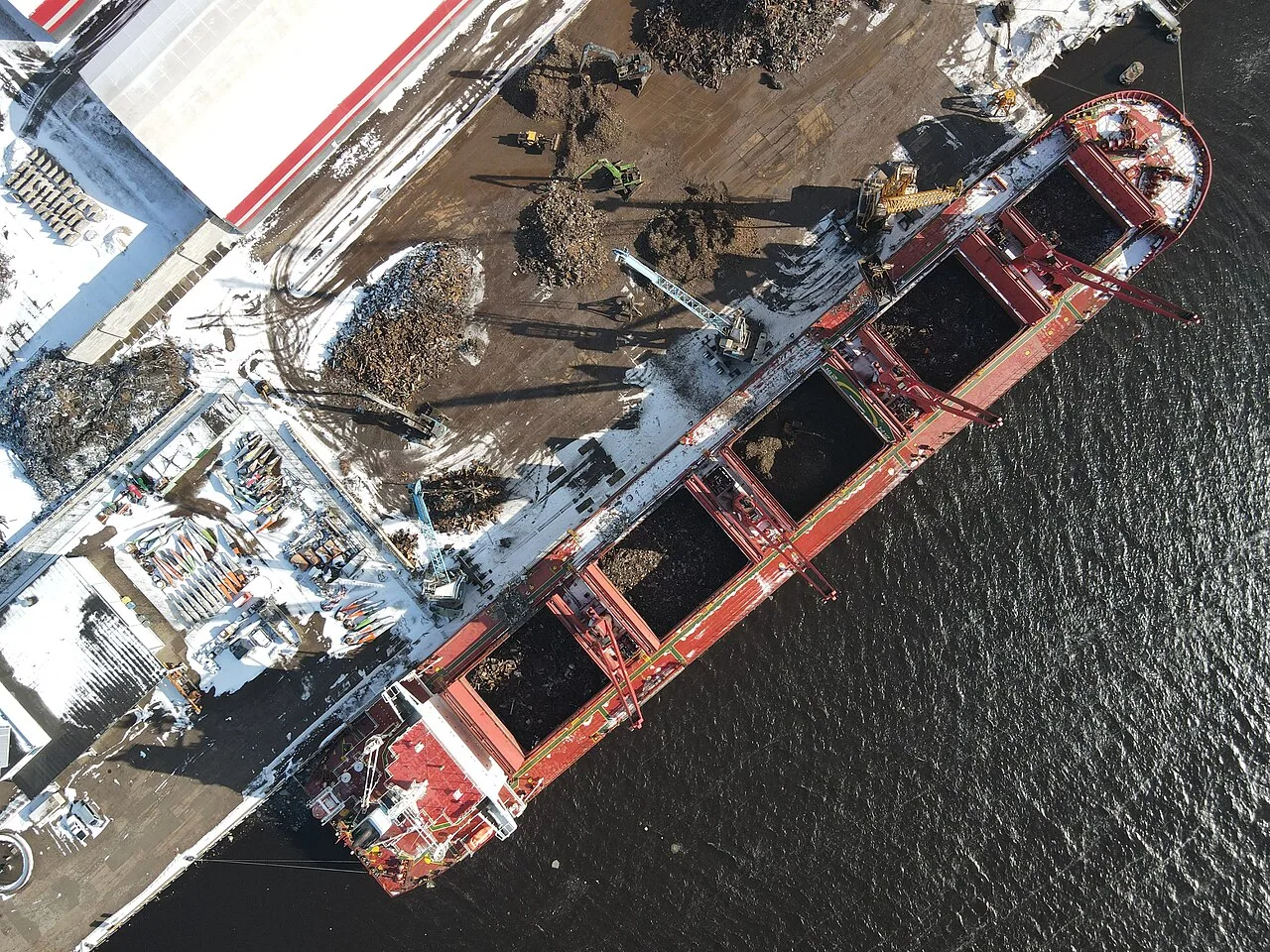
| Vessel type | Dry bulk carrier (merchant ship) |
| First specialised bulk carrier | John Bowes, British collier, built 1852 |
| First self-unloader | Lake freighter Hennepin, Great Lakes, 1902 |
| First diesel-propelled bulk carriers | Appeared from 1911 |
| Share of world merchant fleet | 21 percent |
| Cargo capacity range | Single-hold mini-bulkers up to 400,000 DWT |
| Dominant owners (by flag/nationality) | Greek, Japanese, and Chinese owners hold over half; more than a quarter registered in Panama |
| Largest single builder | South Korea; 82 percent of bulk carriers built in Asia |
| Crew size range | 3 (smallest vessels) to over 30 (largest vessels) |
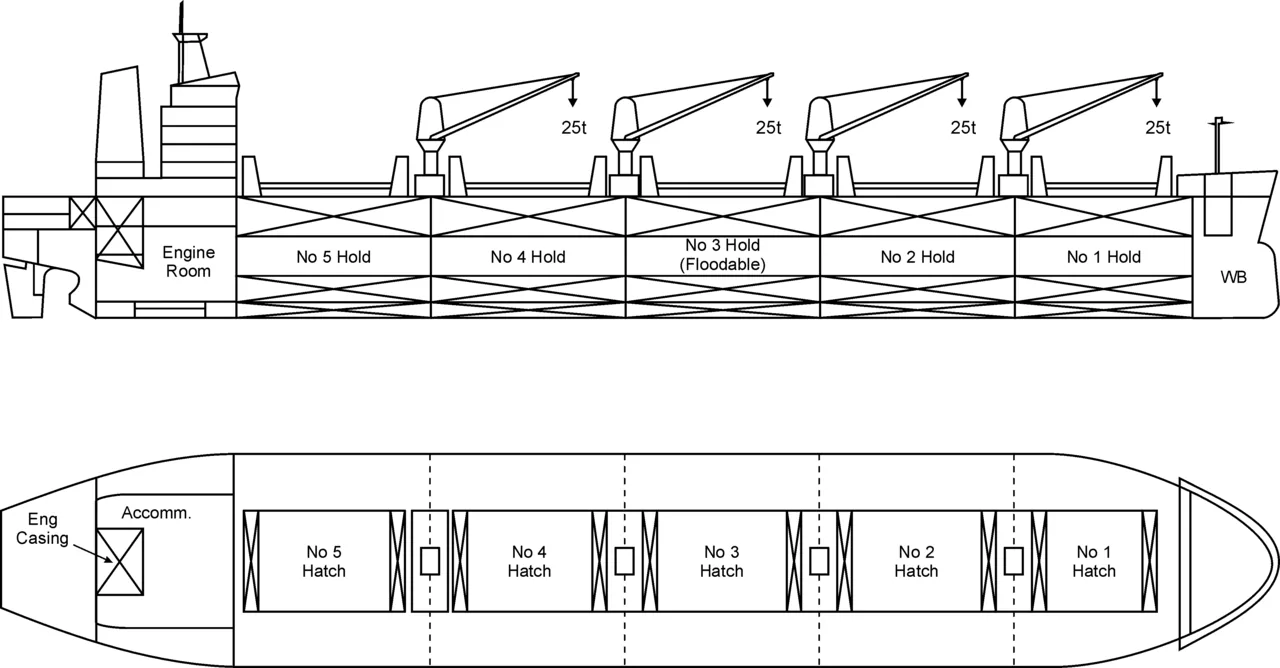
| Key structural features | Single deck, topside tanks, hopper side tanks; large cargo hatchways |
Definition and Classification
The International Convention for the Safety of Life at Sea, as of 1999, defines a bulk carrier as a ship constructed with a single deck, topside tanks, and hopper side tanks in cargo spaces, intended primarily to carry dry cargo in bulk; the definition also covers ore carriers and combination carriers. Most classification societies apply a broader interpretation, designating any vessel that carries dry unpackaged goods as a bulk carrier.
Multipurpose cargo ships are capable of carrying bulk cargo alongside other cargo types but are not specifically designed for bulk carriage and are therefore treated separately. Very small bulk carriers are difficult to distinguish from general cargo ships, and their classification tends to rest more on how the vessel is used than on its structural design. The term 'dry bulk carrier' distinguishes these vessels from bulk liquid carriers such as oil tankers, chemical tankers, and liquefied petroleum gas carriers.
Several abbreviations are used in the industry. 'OBO' denotes a carrier designed for ore, bulk, and oil cargoes in combination, while 'O/O' refers to combination oil-and-ore carriers. The designations 'VLOC', 'VLBC', 'ULOC', and 'ULBC'—standing for very large and ultra-large ore carriers and bulk carriers—were adapted directly from the supertanker terminology of very large crude carrier and ultra-large crude carrier.
How Did the Bulk Carrier Develop?
Before purpose-built bulk carriers existed, shippers relied on two methods to move bulk goods by sea. The first involved longshoremen loading cargo into sacks, stacking the sacks on pallets, and placing them in the hold by crane; the second required a shipper to charter an entire vessel and construct plywood bins inside the holds, then build wooden feeders and shifting boards to guide cargo through small hatches. Both approaches were slow and demanded significant labour, and it was the drive to solve these loading and unloading inefficiencies that pushed the development of the specialised bulk carrier—paralleling the economic pressures that produced the container ship.
The John Bowes, launched in 1852, is recognised as the first steam-powered bulk carrier. Her metal hull, steam engine, and ballasting system that used seawater in place of sandbags gave her a competitive advantage in the British coal trade. Diesel propulsion arrived for bulk carriers in 1911, extending range and reducing operating costs. Two structural characteristics that would become defining features of bulk carriers had also emerged on the Great Lakes by the early twentieth century: the double bottom, adopted in 1890, and the triangular ballast-tank arrangement, introduced in 1905.
The first self-unloading bulk carrier was the Great Lakes freighter Hennepin, which entered service in 1902. By using a conveyor belt system to discharge cargo, the Hennepin dramatically reduced the time vessels spent in port. This innovation proved especially valuable on the Great Lakes, where large volumes of iron ore moved from the mines of Minnesota and Michigan to inland steel mills; in 1929 alone, 73 million tons of iron ore were transported on the Lakes, alongside nearly equal quantities of coal, limestone, and other bulk products.
Before the Second World War, international seaborne demand for bulk products was modest—around 25 million tons for metal ores—with most trade conducted coastally. After the war, industrialised nations, particularly European countries, the United States, and Japan, developed an extensive international bulk trade that made larger and more specialised ocean-going vessels economically necessary. Great Lakes freighters also grew during this period to maximise economies of scale, and self-unloaders became more common to shorten turnaround times. The thousand-foot Great Lakes freighters, constructed during the 1970s, represented a landmark in the evolution of large bulk carriers.
Size, Ownership, and Construction
The global bulk carrier fleet spans an enormous range in scale, from compact single-hold mini-bulk carriers to ore ships with a deadweight capacity of 400,000 metric tons. Greek, Japanese, and Chinese shipowners together hold over half of all bulk carriers worldwide. More than a quarter of the fleet sails under the Panamanian flag, reflecting Panama's established role as a major ship registry.
South Korea is the single largest national builder of bulk carriers, and 82 percent of all bulk carriers in service were constructed somewhere in Asia. This concentration of shipbuilding in Asia reflects decades of industrial investment in yard capacity, steel supply, and skilled labour across the region.
Cargo Types and Loading Operations
Bulk carriers transport a wide range of unpackaged commodities, including grain, coal, iron ore, forest products, steel coils, and cement. These cargoes vary significantly in density, chemical composition, and physical behaviour, which shapes how vessels are designed and how cargo operations are planned and executed.
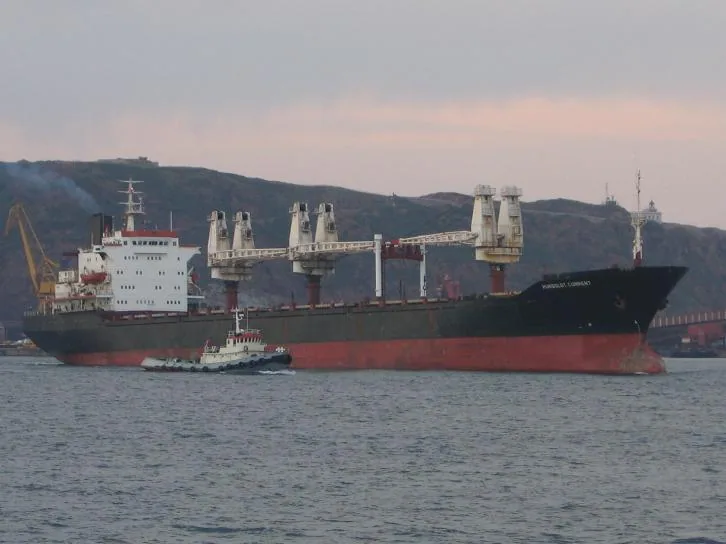
Loading and discharging bulk cargo can take several days, and the complexity of operations varies considerably depending on the cargo and the terminal. Bulk carriers are divided into two broad operational categories: gearless vessels, which depend entirely on shore-based terminal equipment for cargo handling, and geared vessels, which carry cranes integral to the ship and can therefore operate at ports lacking specialised infrastructure.
Some bulk carriers are equipped with self-unloading systems—typically conveyor belts—that allow them to discharge cargo without port equipment. A further specialised category packages the cargo as it is loaded onto the vessel. These design variations reflect the diversity of trades and terminal conditions that bulk carriers must accommodate.
What Are the Main Safety Hazards on Bulk Carriers?
The nature of bulk cargo introduces safety risks that do not apply to general cargo vessels. Dense, corrosive, or abrasive cargoes can damage holds and structural members over time. More immediately dangerous are phenomena such as cargo shifting—where movement of loose material alters a vessel's stability—spontaneous combustion in certain organic or mineral cargoes, and cargo saturation, in which absorbed moisture can dramatically increase cargo weight and affect trim.
The large hatchways that make bulk carriers efficient to load and discharge also represent a structural vulnerability in severe weather. In a storm, these openings can admit large volumes of water rapidly, and once a vessel has listed or heeled, flooding through the hatch covers can accelerate sinking. Corrosion in older ships compounds this problem by weakening the hull and hatch structures that are meant to resist such ingress.
A series of bulk carrier sinkings during the 1990s was linked directly to the combination of ageing, corroded hulls and the design characteristics of large hatchways. In response, international maritime regulators introduced new requirements covering ship design standards, inspection regimes, and procedures enabling crews to abandon ship more efficiently. These regulatory changes were intended to address both the structural causes of the sinkings and the operational factors that had contributed to crew losses.
Crew Roles and Responsibilities
Crew sizes on bulk carriers range from as few as three people aboard the smallest vessels to more than 30 on the largest ships. Regardless of vessel size, crews are responsible for the operation, management, and maintenance of the ship, covering navigation, safety, cargo care, and ongoing maintenance of equipment and structure.
All crew work within the framework of international maritime legislation, which sets standards for watchkeeping, cargo operations, emergency procedures, and vessel maintenance. The safe handling of bulk cargoes—monitoring for shifting, spontaneous combustion, or saturation—forms a critical part of the crew's daily responsibilities throughout a voyage.
Frequently asked questions
What is a bulk carrier?
A bulk carrier is a merchant ship purpose-built to carry unpackaged dry cargo—such as grain, coal, ore, forest products, steel coils, or cement—stored loose in enclosed cargo holds. Under the International Convention for the Safety of Life at Sea (as of 1999), the term also covers ore carriers and combination carriers. Most classification societies use a broader definition that includes any vessel transporting dry unpackaged goods.
When was the first bulk carrier built?
The first vessel recognised as a specialised bulk carrier was the British collier John Bowes, built in 1852. She was distinguished by a metal hull, a steam engine, and a seawater ballasting system that replaced the sandbags previously used for ballast. These features made her competitive in the British coal trade and established the template for future bulk carrier development.
How large can bulk carriers be?
Bulk carriers range from single-hold mini-bulk carriers at the small end of the scale to giant ore ships capable of carrying 400,000 metric tons of deadweight. The fleet therefore spans an enormous range of vessel sizes, reflecting the diversity of trades, cargo volumes, and port capabilities they must serve. Very large and ultra-large ore and bulk carriers are designated by abbreviations such as VLOC, VLBC, ULOC, and ULBC.
Who owns and builds most bulk carriers?
Greek, Japanese, and Chinese shipowners together account for more than half of all bulk carriers worldwide, and over a quarter of the global fleet is registered under the Panamanian flag. South Korea is the single largest builder of bulk carriers, and 82 percent of all such vessels were constructed in Asia. This distribution reflects both the trading patterns that drive demand for bulk shipping and the concentration of shipyard capacity in Asia.
What is a self-unloading bulk carrier?
A self-unloading bulk carrier is equipped with a conveyor belt or similar system that allows it to discharge cargo without relying on shore-based terminal equipment. The concept was pioneered by the Great Lakes freighter Hennepin in 1902, which used a conveyor belt to dramatically cut port turnaround time. Self-unloaders became increasingly common on the Great Lakes after the Second World War as operators sought to maximise efficiency.
Why did so many bulk carriers sink in the 1990s?
A combination of corroded ageing hulls and the structural vulnerability of large cargo hatchways was linked to a series of bulk carrier sinkings during the 1990s. The wide hatchways, essential for efficient cargo handling, can allow rapid flooding in heavy seas, and once a vessel lists or heels, water ingress through them can accelerate sinking. Following these losses, international regulations were strengthened to improve ship design standards, increase inspection requirements, and streamline crew abandonment procedures.
What cargo hazards do bulk carriers face?
Bulk cargoes can be dense, corrosive, or abrasive, posing risks to hull and hold integrity over time. More acute dangers include cargo shifting—where movement of loose material destabilises the vessel—spontaneous combustion in certain cargo types, and cargo saturation, where moisture absorption increases weight and affects the ship's trim and stability. These hazards require crews to monitor cargo condition throughout a voyage in accordance with international maritime legislation.
What is the difference between a geared and a gearless bulk carrier?
A geared bulk carrier carries cranes or other cargo-handling equipment as an integral part of the vessel, allowing it to load and discharge cargo at ports that lack specialised shore infrastructure. A gearless bulk carrier has no such onboard equipment and depends entirely on terminal facilities for cargo operations. The choice between the two types reflects the trades a vessel is designed to serve and the capabilities of the ports it regularly calls at.
Sources
- Wikipedia: Bulk carrier — Factual basis of this entry