Panama Canal
The Panama Canal is an artificial waterway 82 kilometers (51 miles) long that crosses the Isthmus of Panama at its narrowest point, connecting the Caribbean Sea on the Atlantic side with the Pacific Ocean. Inaugurated on 15 August 1914, it functions as one of the principal corridors of global maritime trade, allowing vessels to transit between the two oceans without navigating around the southern tip of South America. The American Society of Civil Engineers has listed the canal among the Seven Wonders of the Modern World.
The canal eliminates the need for ships to take the lengthy and hazardous alternative routes around South America: the Drake Passage, the Strait of Magellan, or the Beagle Channel. By cutting through the isthmus, it decisively shortens both the time and distance of ocean crossings, and in doing so has shaped global trade patterns since its opening.
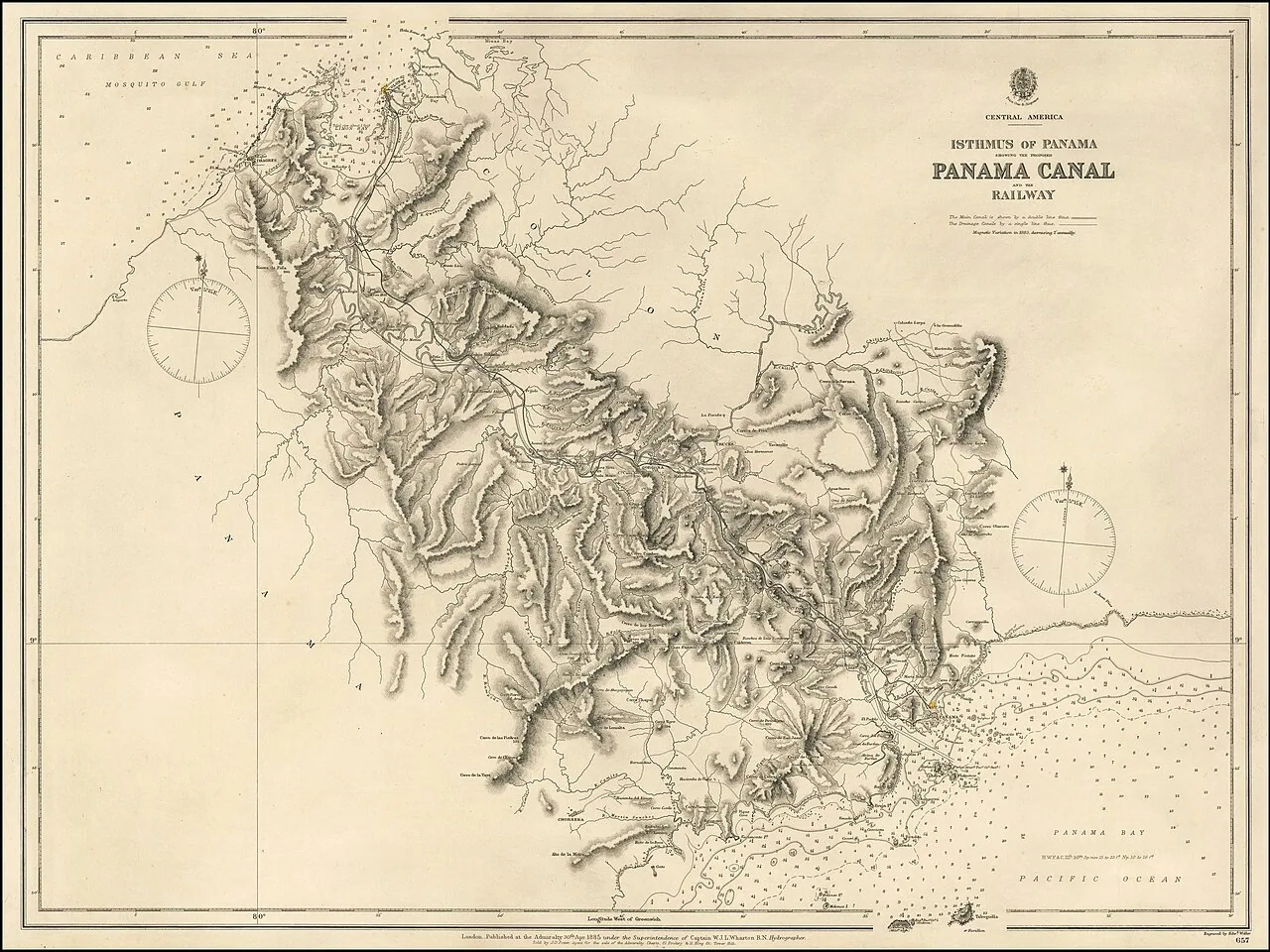
| Type | Artificial lock canal |
| Total length | 82 km (51 miles) |
| Opened | 15 August 1914 |
| Current operator | Panama Canal Authority (Panamanian government-owned) |
| Summit elevation | 26 meters (85 ft) above sea level (Gatun Lake) |
| Original lock width | 33.5 meters (110 ft) — Panamax standard |
| Expanded lock operation began | 26 June 2016 — Neopanamax standard |
| Annual vessels transited (2008) | 14,702 vessels; 333.7 million PC/UMS tons |
| Average transit time (2017) | 11.38 hours between the two outer locks |
| Cumulative transits by 2012 | More than 815,000 vessels |
What route does the canal follow?
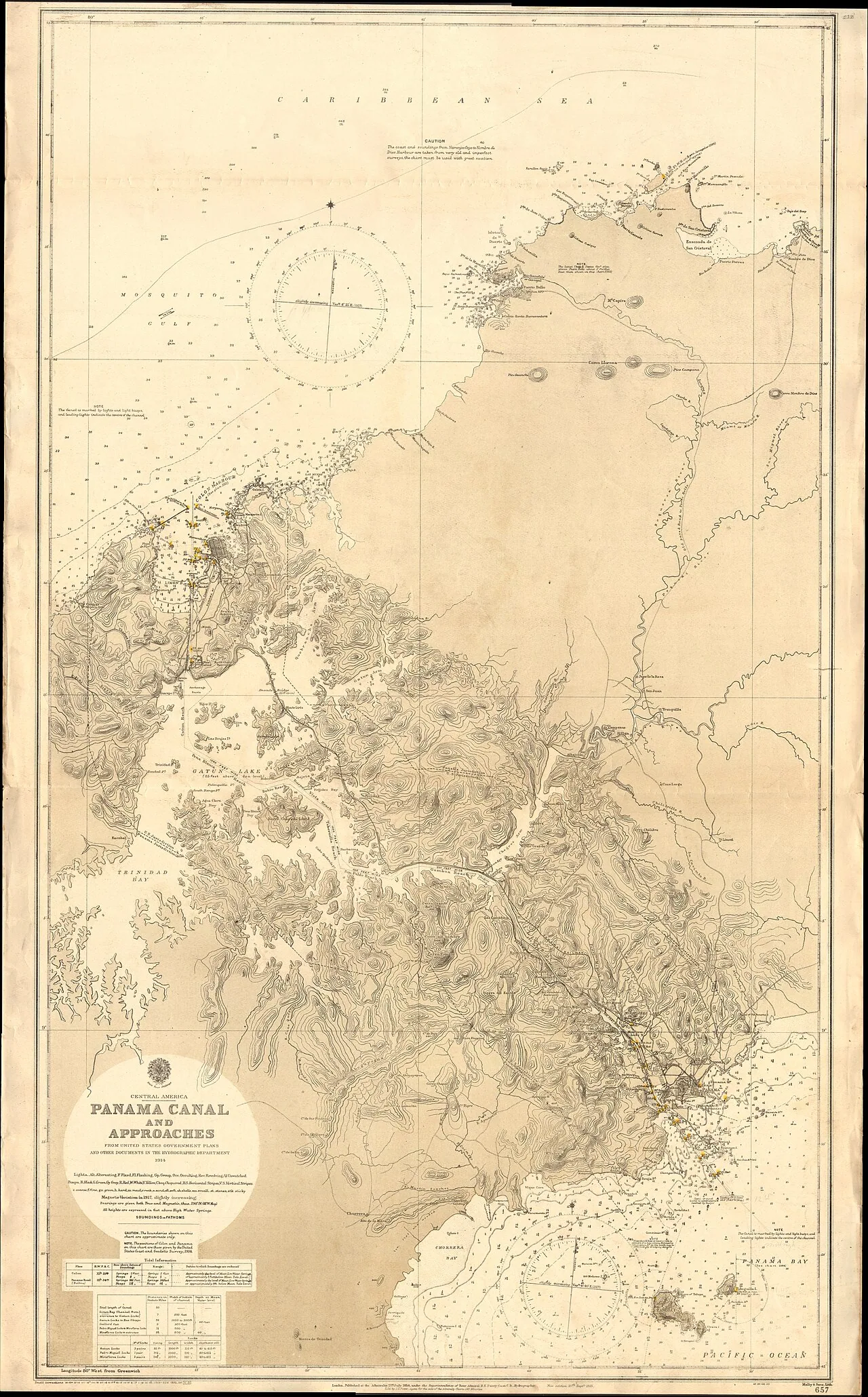
The canal runs across the Isthmus of Panama, the narrow land bridge connecting North and South America, linking the Caribbean Sea in the north-east with the Pacific Ocean in the south-west. Its 82-kilometer course was chosen because this section of the isthmus is the narrowest available, reducing the amount of excavation and construction required.
Rather than cutting a sea-level channel, the canal uses a lock-and-lake system. Ships enter from either the Caribbean or the Pacific end, where locks lift them 26 meters (85 ft) to the level of Gatun Lake, an artificial freshwater reservoir that occupies the central portion of the route. At the far end, a second set of locks lowers vessels back down to ocean level.
Gatun Lake and the lock system
Gatun Lake was created by damming the Chagres River and Lake Alajuela. The resulting reservoir sits 26 meters (85 ft) above sea level and forms the navigable core of the canal, reducing the volume of rock and soil that would otherwise have needed to be excavated if a sea-level route had been chosen.
Each transit through the lock chambers requires an average of 200,000,000 liters (52 million US gallons) of fresh water, drawn from the lake and released into the sea when the lock gates open. Because the system depends entirely on stored freshwater, the canal is vulnerable to low water levels during periods of drought.
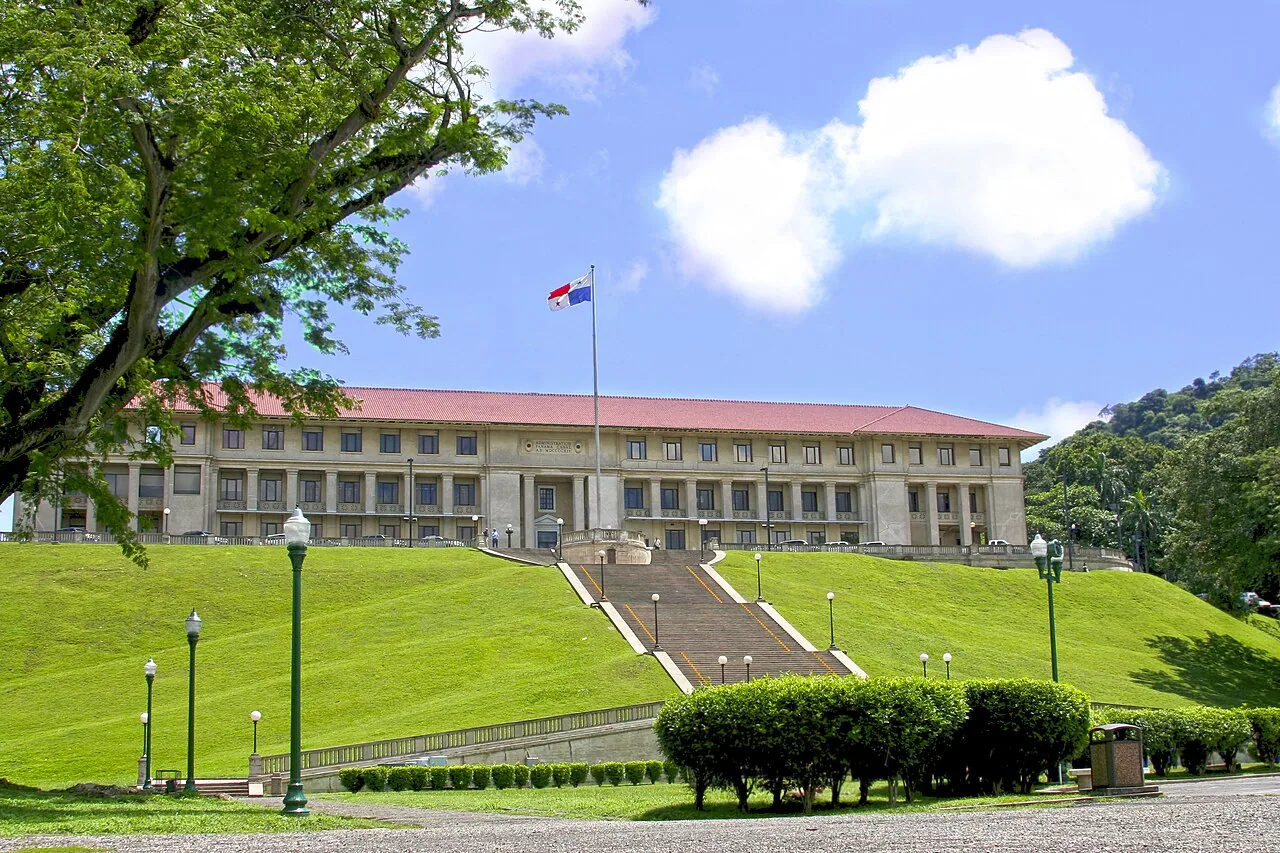
Why the canal matters: the alternative routes it replaces
Before the canal opened, ships sailing between the Atlantic and Pacific oceans had to round the southernmost tip of South America. Three routes existed for this passage: the open ocean of the Drake Passage, the Strait of Magellan, and the Beagle Channel. All three are substantially longer than the Panama crossing and are regarded as hazardous for commercial shipping.
By providing a short and relatively inexpensive transit between the two oceans, the canal has influenced global trade patterns since 1914. It has supported economic growth in both developed and developing countries and has provided an impetus for economic expansion in regions that would otherwise have been difficult to connect to major shipping lanes.
Original locks and the Panamax standard
The original locks, completed in time for the canal's inauguration in 1914, measure 33.5 meters (110 ft) in width. This dimension defined what became known as the Panamax ship specification: the maximum beam a vessel could carry and still fit through the canal's chambers.
Annual traffic at opening was approximately 1,000 ships. By 2008 that figure had grown to 14,702 vessels, representing 333.7 million Panama Canal/Universal Measurement System (PC/UMS) tons. By 2012 the cumulative total of vessels to have used the canal since inauguration exceeded 815,000.
The 2016 expansion and the Neopanamax lane
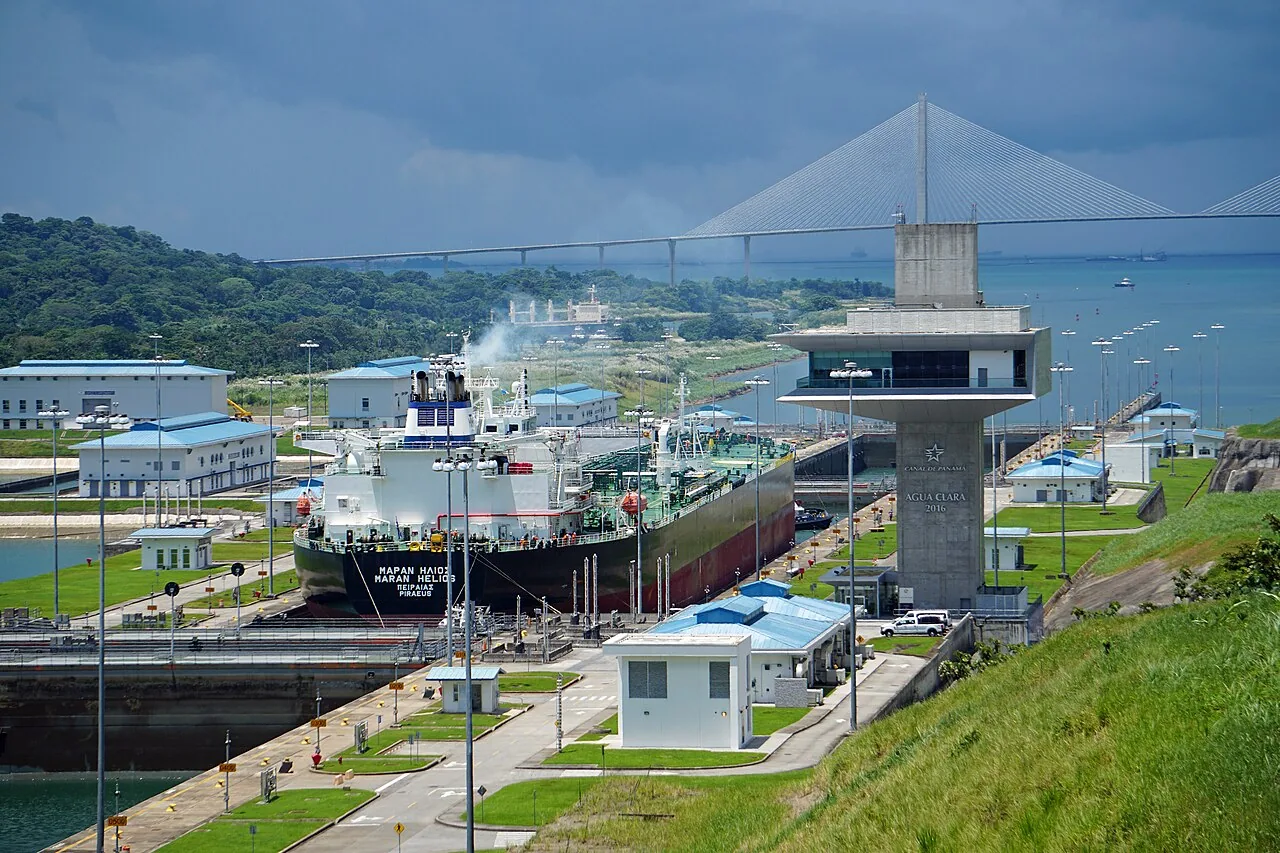
Construction of a third, wider lane of locks began in September 2007 and was completed in May 2016. The expanded waterway commenced commercial operation on 26 June 2016. The new locks accommodate larger vessels classified as Neopanamax, which cannot fit through the original 33.5-meter chambers.
The addition of a parallel lane effectively doubled the canal's capacity in terms of ship size, allowing a category of container ships, bulk carriers, and tankers that had previously been excluded from the Panama route to use the waterway for the first time.
Who uses the canal?
In 2012, the five largest national users of the canal, ranked by volume of traffic, were the United States, China, Chile, Japan, and South Korea. The canal therefore serves as a primary corridor for trans-Pacific trade between Asia and the Americas, as well as for trade between North America's Atlantic and Pacific coasts.
In 2017, the average time for a vessel to pass between the canal's two outer locks was 11.38 hours. This figure reflects the scheduling, lockage procedures, and lake-crossing distance involved in a full transit.
Early proposals and the route decision
The concept of a canal across the isthmus was raised as early as 1513 by Spanish conquistador Vasco Núñez de Balboa (c.1475–1519), who noted the possibility after first crossing the Isthmus of Panama. The Holy Roman Emperor Charles V ordered a formal route survey in 1534 to ease voyages between Spain and Peru.
In 1811, German naturalist Alexander von Humboldt evaluated five possible canal routes across Central America and concluded that the most promising ran across Nicaragua via Lake Nicaragua. His analysis led the British to attempt a Nicaraguan canal in 1843. That effort came to nothing, but it produced the Clayton–Bulwer Treaty of 1850, which bound the United Kingdom and the United States to joint control over any canal built anywhere in Central America. Panama was ultimately selected over Nicaragua when construction finally advanced under French and then American direction.
Construction history
France initiated construction in 1881, but the project halted in 1889 because of a collapse of investor confidence driven by severe engineering difficulties and a high rate of worker mortality. The United States took over in 1904 and completed the canal, opening it on 15 August 1914. Its construction is recognized as one of the largest and most difficult engineering projects ever undertaken.
The United States retained control of the canal and the surrounding Panama Canal Zone until the Torrijos–Carter Treaties of 1977 set out a schedule for transfer. A period of joint American–Panamanian administration followed, and the Panamanian government assumed full control in 1999. The canal has since been managed by the Panama Canal Authority, a Panamanian government-owned entity.
The discovery of gold in California in 1848 had earlier demonstrated the commercial value of a Panama crossing. American businessman William Henry Aspinwall had operated a combined steamship-and-overland route through the isthmus before the canal existed, and between 1850 and 1855 a syndicate he founded built the Panama Canal Railway from Colón on the Caribbean coast to Panama City, at a cost of US$8,000,000 and the lives of between 6,000 and 12,000 construction workers.
Frequently asked questions
How long is the Panama Canal?
The Panama Canal is 82 kilometers (51 miles) long. It runs across the Isthmus of Panama at its narrowest point, connecting the Caribbean Sea with the Pacific Ocean.
Why was the Panama Canal built where it is?
The isthmus site was chosen because it represents the narrowest land crossing between the Atlantic and Pacific oceans in the Americas. Using it minimized the amount of excavation required compared with other proposed routes. Alternative locations, including a Nicaraguan route via Lake Nicaragua favored by Alexander von Humboldt in 1811, were considered but ultimately not selected.
What routes does the canal replace?
Ships that cannot use the canal must travel around the southern tip of South America. Three routes exist for this: the Drake Passage, the Strait of Magellan, and the Beagle Channel. All three are significantly longer and are considered hazardous for commercial shipping.
How do ships travel through the canal if the ocean ends are at different levels?
The canal uses a lock-and-lake system rather than a sea-level cut. Locks at each ocean entrance raise vessels 26 meters (85 ft) to the level of Gatun Lake, the artificial freshwater reservoir at the canal's center. Locks at the far end then lower the ships back to ocean level. Each transit uses an average of 200,000,000 liters (52 million US gallons) of fresh water.
What is the difference between Panamax and Neopanamax?
Panamax is the vessel size defined by the original lock chambers, which are 33.5 meters (110 ft) wide. Neopanamax refers to larger ships that can use the third lane of wider locks added during the expansion completed in May 2016 and opened commercially on 26 June 2016. Ships too large for the original locks but within Neopanamax dimensions were previously unable to use the canal.
When did Panama take control of the canal?
The Torrijos–Carter Treaties of 1977 established a framework for transferring the canal from the United States to Panama. Following a period of joint American–Panamanian administration, Panama assumed full control in 1999. The canal is now managed by the Panama Canal Authority, a Panamanian government-owned body.
How much traffic does the canal handle?
At its opening in 1914, the canal handled approximately 1,000 ships per year. By 2008 that had grown to 14,702 vessels, totaling 333.7 million Panama Canal/Universal Measurement System (PC/UMS) tons. By 2012 more than 815,000 vessels in total had transited the canal since inauguration.
How long does it take to pass through the canal?
In 2017, the average time for a ship to travel between the canal's two outer locks was 11.38 hours. This includes time spent in the lock chambers, crossing Gatun Lake, and navigating the channel sections at each end.
Sources
- Wikipedia: Panama Canal — Factual basis of this entry