Port of Shanghai
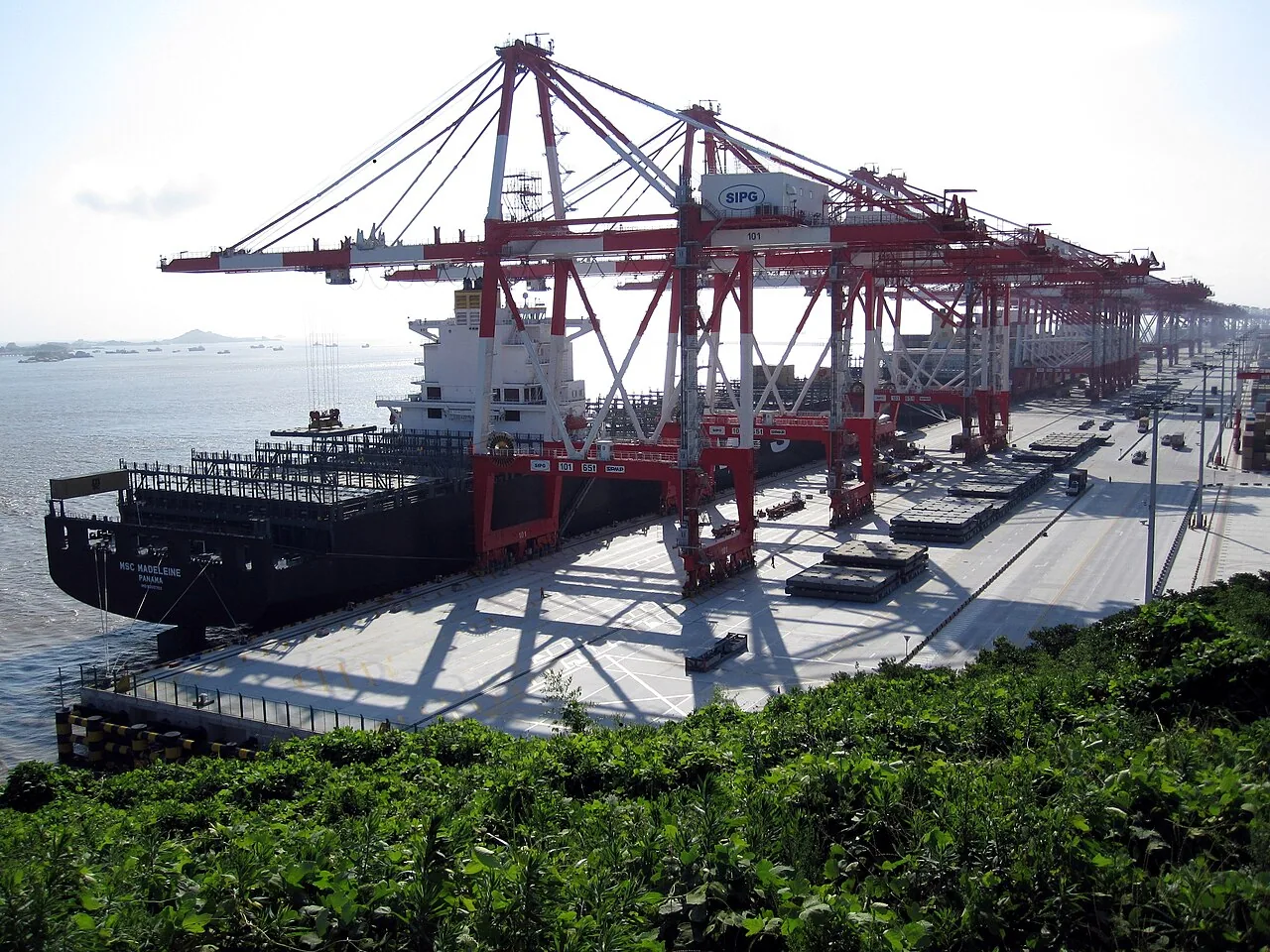
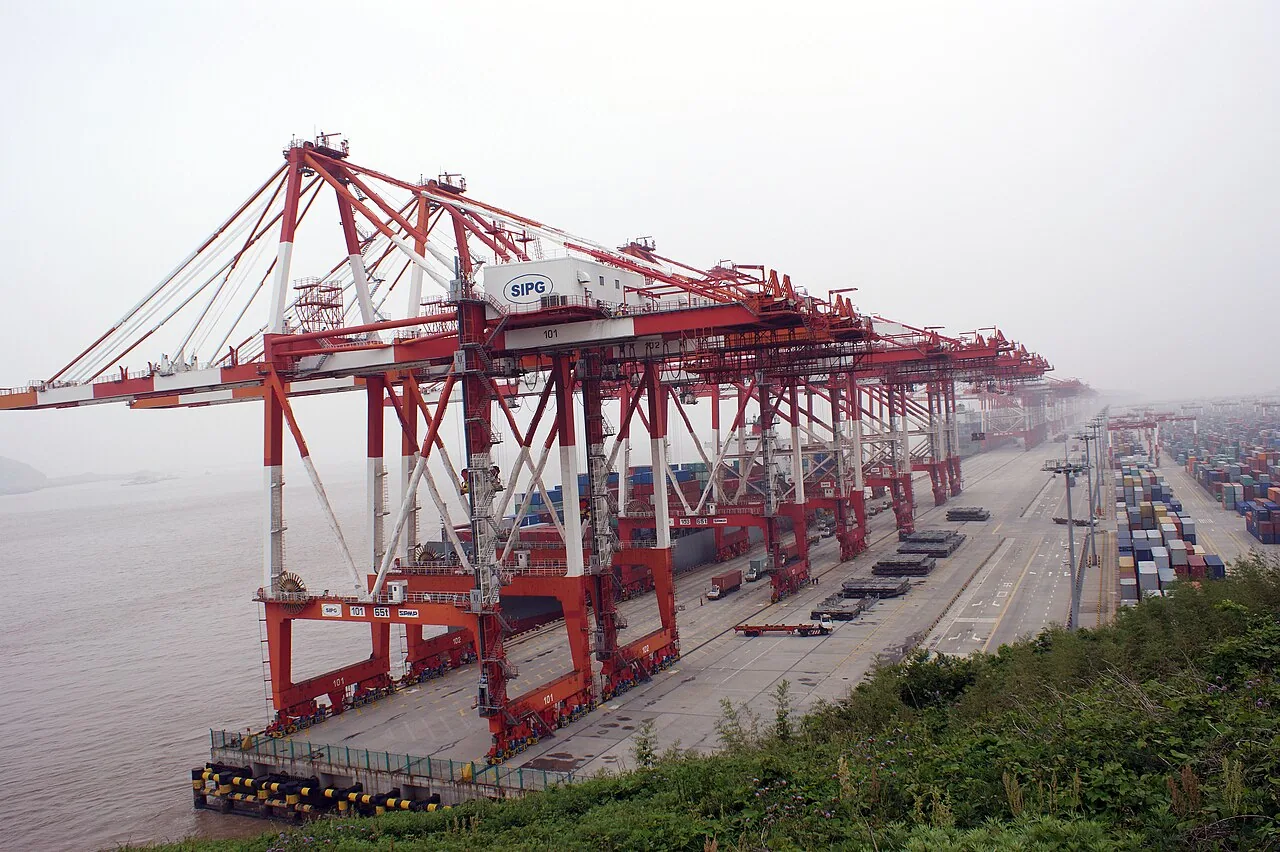
The Port of Shanghai is a major deep-sea and river port complex situated at the confluence of the Yangtze River, Huangpu River and Qiantang River, facing the East China Sea to the east and Hangzhou Bay to the south. Administered since 2003 by Shanghai International Port Group (SIPG), it ranks as one of only four port-cities worldwide classified as a large-port Megacity, a designation reflecting both its exceptional cargo throughput and its enormous urban population.
In 2010 Shanghai surpassed the Port of Singapore to become the world's busiest container port, recording 29.05 million TEU against Singapore's figure of roughly half a million TEU fewer. By 2019 annual throughput had grown to 43.3 million TEU.
| Port type | Deep-sea port and river port |
| Operator | Shanghai International Port Group (SIPG) |
| Operator established | 2003 (superseding the Shanghai Port Authority) |
| Public ownership | Shanghai Municipal Government holds 44% of outstanding shares |
| Throughput (2010) | 29.05 million TEU |
| Throughput (2019) | 43.3 million TEU |
| Became world's busiest container port | 2010 |
| Key deep-water facility | Yangshan Deep Water Port, opened by 2005 |
| Yangshan access | Donghai Bridge, linking Yangshan islands in Hangzhou Bay to Shanghai |
| Port classification | Large-port Megacity (one of four worldwide) |
Geography and waterways
The Port of Shanghai occupies a strategically significant position where three major waterways converge: the Yangtze River, the Huangpu River (which flows into the Yangtze), and the Qiantang River. The East China Sea lies to the east of the port complex, while Hangzhou Bay opens to the south.
This geographic configuration gives the port direct access to China's most economically productive interior regions. The Yangtze River corridor connects the port to the densely populated and industrially developed provinces of Anhui, Jiangsu, Zhejiang and Henan, making Shanghai the principal gateway for the trade of that entire hinterland.
When did Shanghai become a major international port?
Shanghai's emergence as a commercial port dates to 1842, when it was designated a treaty port following the conclusion of the First Opium War. The city developed rapidly as an international commercial centre, and by the early twentieth century it had become the largest city and the largest port in East Asia.
The Communist takeover of Shanghai in 1949 sharply curtailed overseas trade, and the economic policies of the early People's Republic significantly hampered further development of the port's infrastructure and capital base. This trajectory reversed in 1991, when the central government authorised Shanghai to begin economic reforms, triggering a period of rapid port expansion that has continued since.
Yangshan Deep Water Port
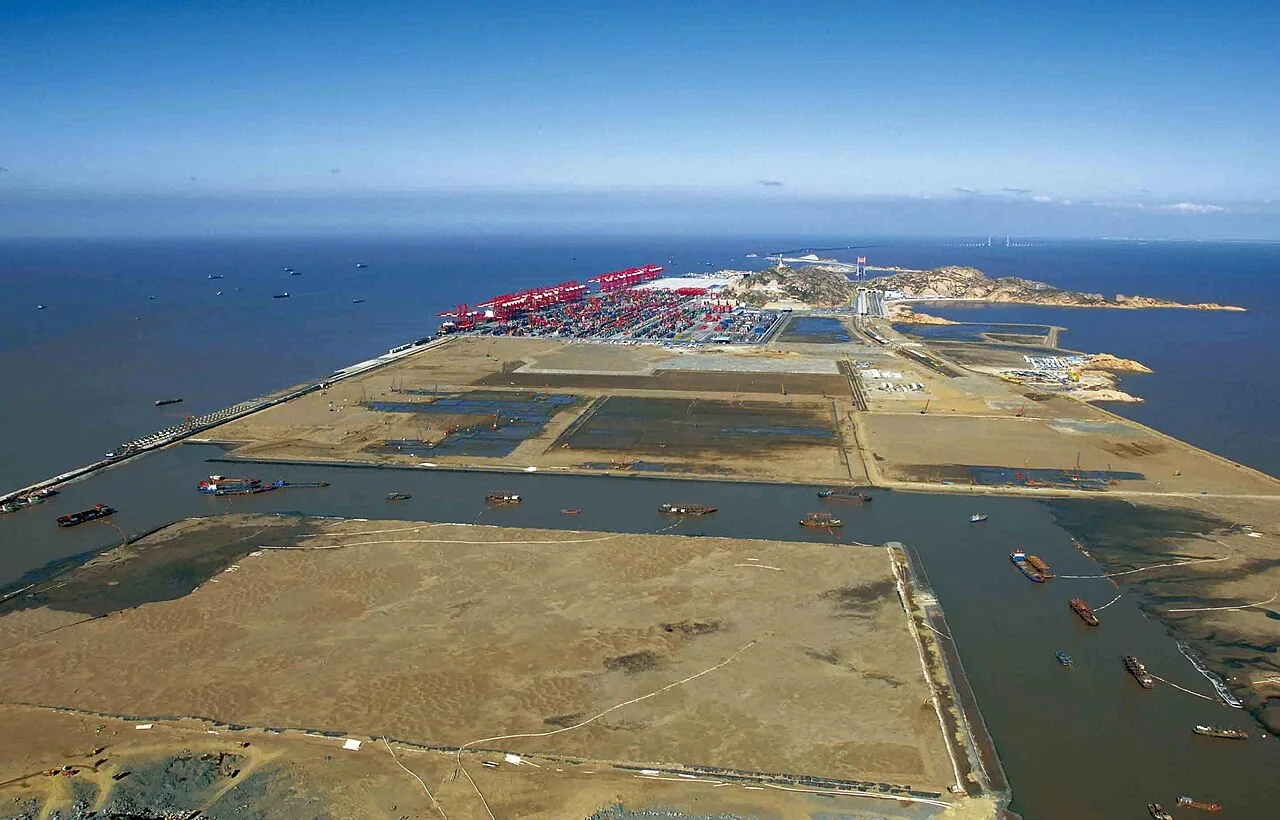
By 2005 the construction of the Yangshan Deep Water Port had been completed on the Yangshan islands, a group of islands situated in Hangzhou Bay. The facility was developed specifically to overcome the shallow-water constraints that limited capacity at Shanghai's existing harbour locations.
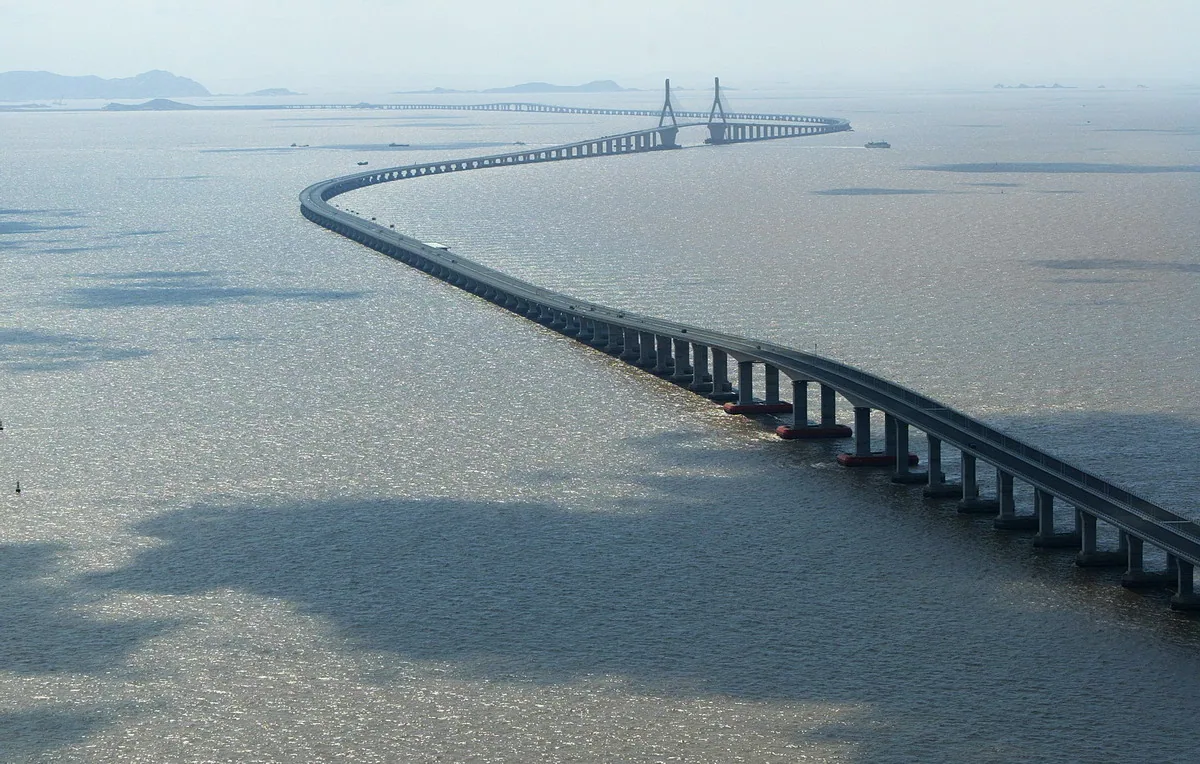
The Yangshan islands are connected to the Shanghai mainland by the Donghai Bridge. The deep-water capability of Yangshan positioned Shanghai to compete directly with the nearby Port of Ningbo-Zhoushan, itself a significant deep-water facility in the region.
How is the port administered?
The port is managed by Shanghai International Port Group (SIPG), a public listed company that was formed through the reconstitution of the former Shanghai Port Authority in 2003. The Shanghai Municipal Government retains a 44% stake in the company's outstanding shares.
Earlier corporate entities involved in building the port's container infrastructure included the Shanghai Port Container Co. and Waigaoqiao Bonded Zone Port Co. The group operates under the Chinese name 上海国际港务集团 and its principal operating arm is Shanghai International Port Company Limited.
Throughput and global standing
Shanghai overtook Singapore in 2010 to claim the title of the world's busiest container port by TEU volume, recording 29.05 million TEU in that year compared with Singapore's figure of approximately half a million TEU less. The margin between the two ports illustrated how rapidly Shanghai had expanded following the economic liberalisation of the 1990s and the opening of Yangshan.
Annual throughput climbed substantially over the following decade, reaching 43.3 million TEU in 2019. Shanghai is one of four port-cities globally to hold the designation of large-port Megacity, a category that reflects both the scale of port activity and the size of the surrounding urban population.
Harbour zones
The port of Shanghai is organised into three principal working zones: the Yangshan Deep Water Port, the Huangpu River zone and the Yangtze River zone. Each zone serves distinct operational and cargo functions within the broader port complex.
The Huangpu River zone runs through the urban core of Shanghai and historically formed the heart of the city's port activity. The Yangtze River zone extends the port's reach deep into China's interior, reinforcing Shanghai's role as the dominant trade gateway for the broader Yangtze River economic region.
Role in the Maritime Silk Road
The Port of Shanghai forms part of the 21st Century Maritime Silk Road, a modern trade route that originates along the Chinese coast and passes through Singapore before continuing towards the southern tip of India and on to Mombasa in East Africa. From Mombasa the route traverses the Red Sea and passes through the Suez Canal into the Mediterranean.
Within the Mediterranean segment, the route extends to the Upper Adriatic and terminates at the northern Italian hub of Trieste, which serves as a connection point for Central Europe and the North Sea. Shanghai's position at the eastern anchor of this route underlines its function as one of the principal nodes in global maritime trade.
Economic hinterland
The port functions as the primary foreign-trade gateway for the Yangtze River economic region, one of China's most productive zones. The provinces it most directly serves—Anhui, Jiangsu, Zhejiang and Henan—are characterised by dense populations, a strong industrial base and a well-developed agricultural sector.
This combination of industrial output, agricultural production and population concentration generates substantial import and export flows, cementing the port's centrality to Chinese and global supply chains. Shanghai's position at the mouth of the Yangtze ensures that goods produced or consumed far inland can move efficiently through a single major maritime gateway.
Frequently asked questions
When did the Port of Shanghai become the world's busiest container port?
Shanghai became the world's busiest container port in 2010, when it surpassed the Port of Singapore. That year Shanghai handled 29.05 million TEU, with Singapore recording roughly half a million TEU fewer. By 2019 Shanghai's annual throughput had reached 43.3 million TEU.
Who operates the Port of Shanghai?
The port is operated by Shanghai International Port Group (SIPG), which was established in 2003 when the former Shanghai Port Authority was reconstituted. SIPG is a publicly listed company in which the Shanghai Municipal Government holds a 44% stake in outstanding shares.
What is the Yangshan Deep Water Port and why was it built?
The Yangshan Deep Water Port is a major terminal built on the Yangshan islands in Hangzhou Bay, completed by 2005. It was developed to overcome shallow-water limitations at Shanghai's existing harbour locations and to allow the port to handle the largest deep-draft container vessels. The islands are connected to Shanghai by the Donghai Bridge.
What rivers and waterways does the Port of Shanghai encompass?
The port encompasses the confluences of the Yangtze River, the Huangpu River and the Qiantang River. The Huangpu flows into the Yangtze within the port area, and the complex faces the East China Sea to the east and Hangzhou Bay to the south.
What provinces does the Port of Shanghai serve as a trade gateway?
The port serves as the primary foreign-trade gateway for the Yangtze River hinterland, particularly the provinces of Anhui, Jiangsu, Zhejiang and Henan. These provinces share a dense population, a strong industrial base and a developed agricultural sector.
What is a large-port Megacity and how does Shanghai qualify?
A large-port Megacity is a classification applied to cities that combine very high volumes of port traffic with a large urban population. Shanghai is one of only four port-cities worldwide to hold this designation. The classification reflects both the exceptional scale of the port's container throughput and the size of Shanghai as a metropolitan centre.
When did Shanghai first become a major international port city?
Shanghai was designated a treaty port in 1842, which set it on the path to becoming an international commercial hub. By the early twentieth century it was the largest city and the largest port in East Asia. Overseas trade contracted sharply after the Communist takeover in 1949, and significant expansion resumed only after the central government authorised economic reforms in 1991.
What is the Port of Shanghai's connection to the Maritime Silk Road?
The port is a key node on the 21st Century Maritime Silk Road, a trade route running from the Chinese coast through Singapore, past the southern tip of India, to Mombasa, then through the Red Sea and Suez Canal into the Mediterranean. The route continues to the Upper Adriatic and the northern Italian hub of Trieste, which connects onward to Central Europe and the North Sea.
Sources
- Wikipedia: Port of Shanghai — Factual basis of this entry