Port of Rotterdam
The Port of Rotterdam, situated in and around the city of Rotterdam in the Dutch province of South Holland, is the largest seaport in Europe and the largest seaport in the world outside Asia. Between 1962 and 2004 it held the title of the world's busiest port by annual cargo tonnage, before being overtaken first by Singapore and subsequently by Shanghai and other major Chinese ports. By 2017 it ranked tenth globally by annual cargo tonnage, and in 2020 it ranked tenth worldwide by container throughput measured in twenty-foot equivalent units.
Covering 105 square kilometres and extending over a distance of 40 kilometres, the port occupies the Rhine-Meuse-Scheldt delta and serves a European hinterland of more than 500 million consumers through five distinct port areas and three distribution parks.
| Location | Rotterdam, South Holland, Netherlands |
| Total area | 105 square kilometres (41 sq mi) |
| Length | 40 kilometres (25 mi) |
| World ranking by TEU (2020) | 10th |
| World ranking by cargo tonnage (2017) | 10th |
| Period as world's busiest port | 1962–2004 |
| Maximum draft at EECV quay | 24 metres (78 feet) |
| Betuweroute (Dutch section opened) | 2007 |
| Nieuwe Waterweg completed | 1872 |
| Port concessions within boundaries | 5 |
Where does the port sit and what does it comprise?
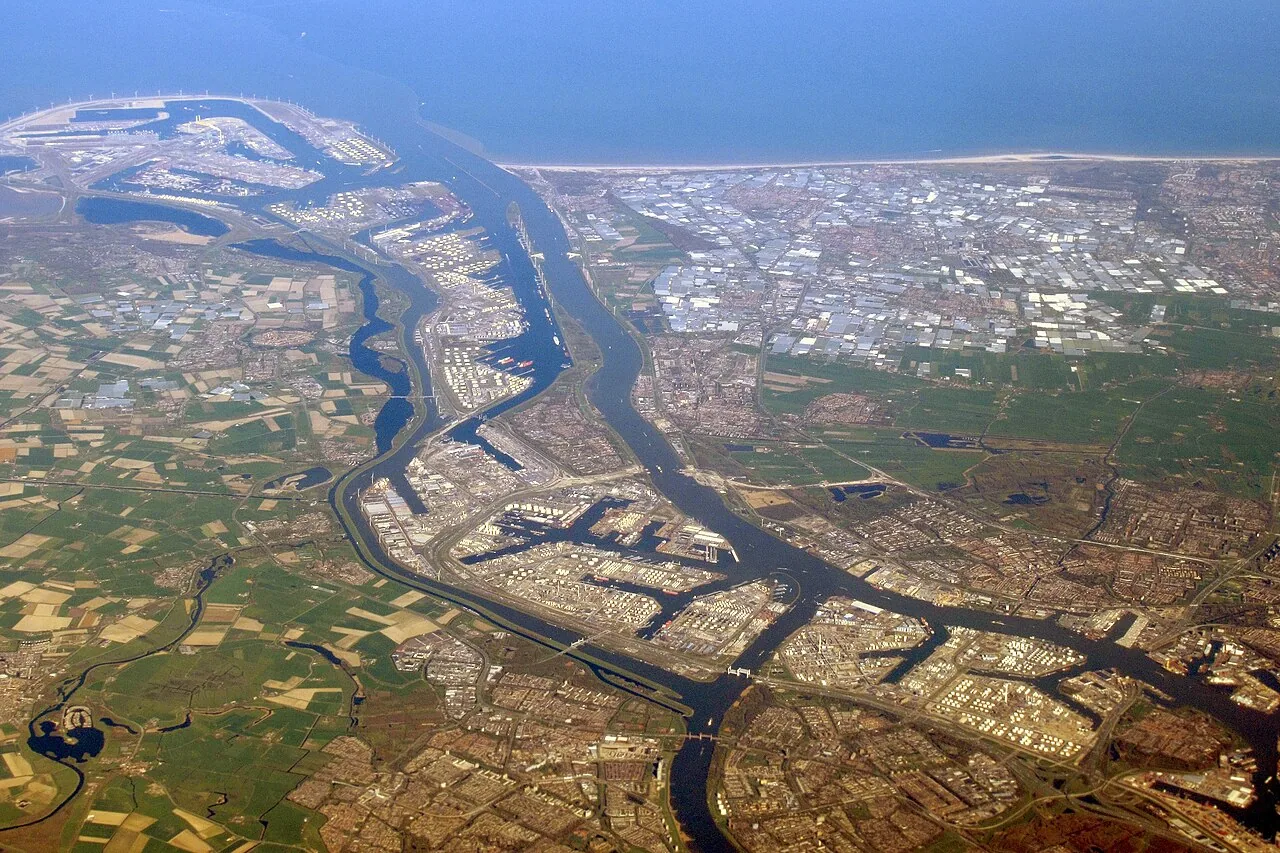
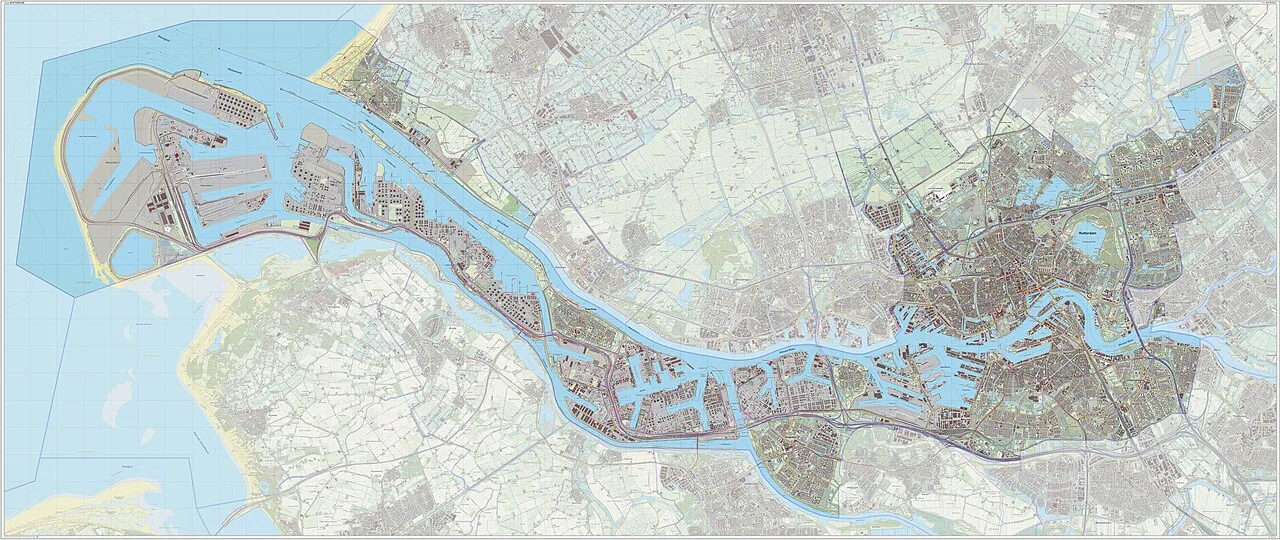
The Port of Rotterdam occupies the Rhine-Meuse-Scheldt delta, with its territory running from the historic city-centre harbour westward to the North Sea. Its constituent areas include the historic harbour and Delfshaven, the Maashaven, Rijnhaven and Feijenoord complex, harbours around Nieuw-Mathenesse, Waalhaven, Vondelingenplaat, Eemhaven, Botlek, and the Europoort complex situated along the Calandkanaal, Nieuwe Waterweg and Scheur.
Beyond these is the Maasvlakte, a reclaimed area projecting into the North Sea near Hook of Holland. Five separate port concessions operate within Rotterdam's boundaries, each run by its own company under the overall authority of the Port of Rotterdam.
How was the Nieuwe Waterweg built, and why?
During the first half of the nineteenth century, port activity gradually shifted westward from the city centre toward the North Sea. To give oceangoing vessels a direct, adequately deep connection to the Rhine and Meuse rivers, a large canal called the Nieuwe Waterweg — meaning New Waterway — was designed by engineer Pieter Caland. The design intended the canal to be partly excavated and then further deepened by the natural force of the water current, though the final stretch ultimately required manual labour as well.
The Nieuwe Waterweg was completed in 1872, giving Rotterdam a continuous deep-water link between its harbour areas and the sea. Industrial activity developed along both banks in the years that followed, and the canal has been deepened on several occasions since its opening.
Europoort and the Maasvlakte extensions
As shipping volumes grew, Rotterdam expanded its territory seaward by constructing additional docks and harbour basins. The Europoort complex — its name referencing its role as a gateway to Europe — was developed along the mouth of the Nieuwe Waterweg. During the 1970s the port was extended further by completing the Maasvlakte, a land-reclamation project built into the North Sea on the southern side of the Nieuwe Waterweg mouth near Hook of Holland.
A second Maasvlakte received initial political approval in 2004, but the Dutch Council of State halted the project in 2005 on the grounds that environmental considerations had been inadequately addressed in the plans. Revised approval was granted on 10 October 2006, allowing construction to begin in 2008 with the aim of welcoming the first vessel in 2013. The exposed coastal position of the Maasvlakte area has also led to the installation of large numbers of wind turbines, visibly altering the industrial skyline.
Cargo types and hinterland connections
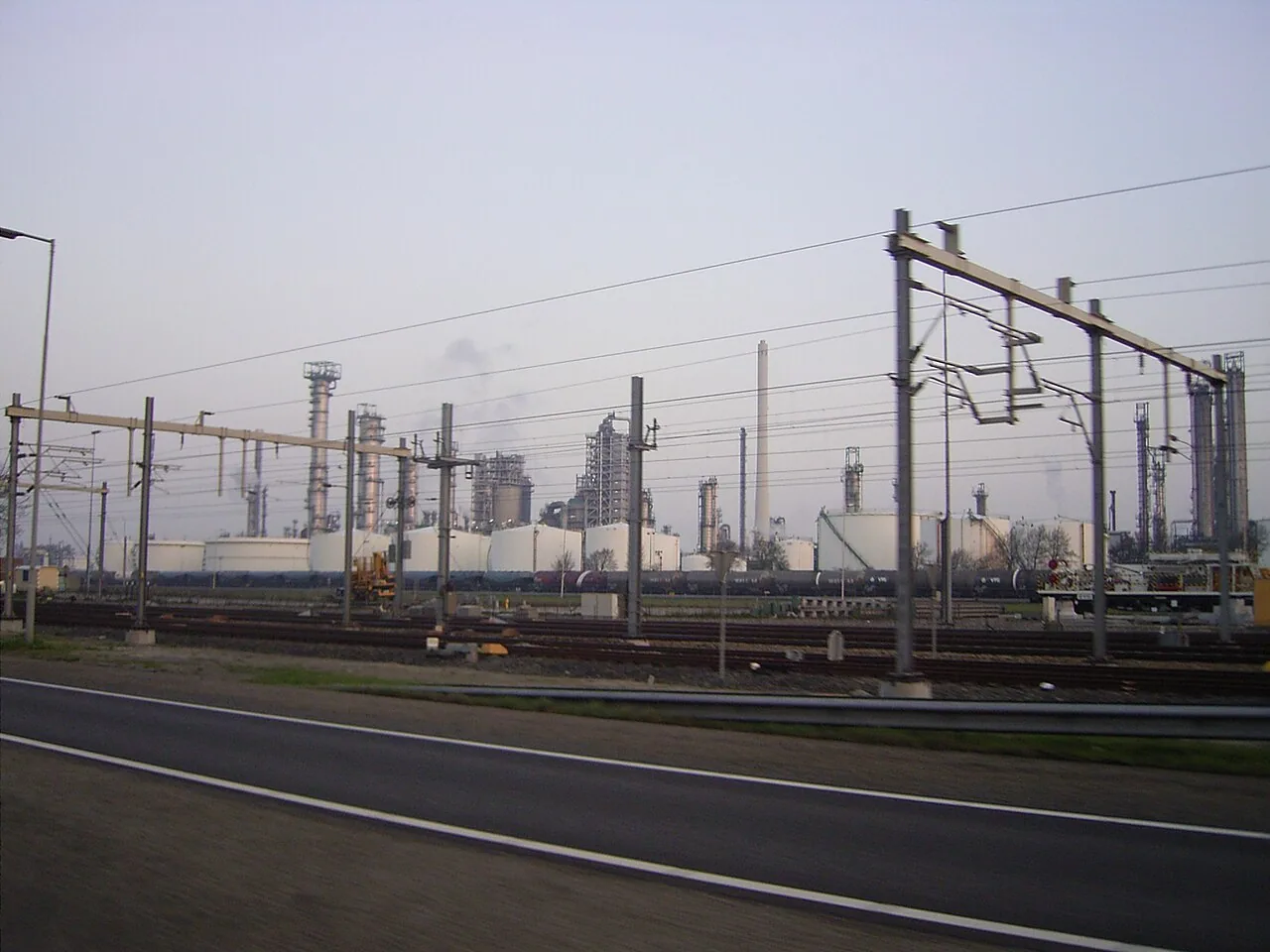
Petrochemical industry and general cargo transshipment are the port's most significant activities. Rotterdam functions as a major transit point for bulk goods and other cargo moving between continental Europe and the rest of the world, with onward distribution by oceangoing vessel, river barge, rail and road. Large oil refineries are located to the west of the city.
The rivers Meuse and Rhine provide natural corridors into the broader European hinterland. The Betuweroute, a dedicated freight railway linking Rotterdam with Germany, was under construction from 2000 onwards; its Dutch section opened in 2007.
What is the significance of the 24-metre draft at the EECV quay?
The EECV quay at Rotterdam has a water depth of 24 metres (78 feet). Until 2011, this made it one of only two berths in the world capable of accommodating the MS Berge Stahl, a fully loaded iron ore bulk carrier whose draft reaches 23 metres (75 feet). The only other berth able to receive the vessel when fully laden was the Terminal of Ponta da Madeira in Brazil; a new deep-water iron ore wharf at Caofeidian in China added a third option when it opened in 2011.
Because the vessel's keel sits only one metre (three feet) above the seabed at the EECV quay, docking is restricted to a narrow tidal window. Ships of this class must approach via the Eurogeul waterway.
Robotic and automated container handling
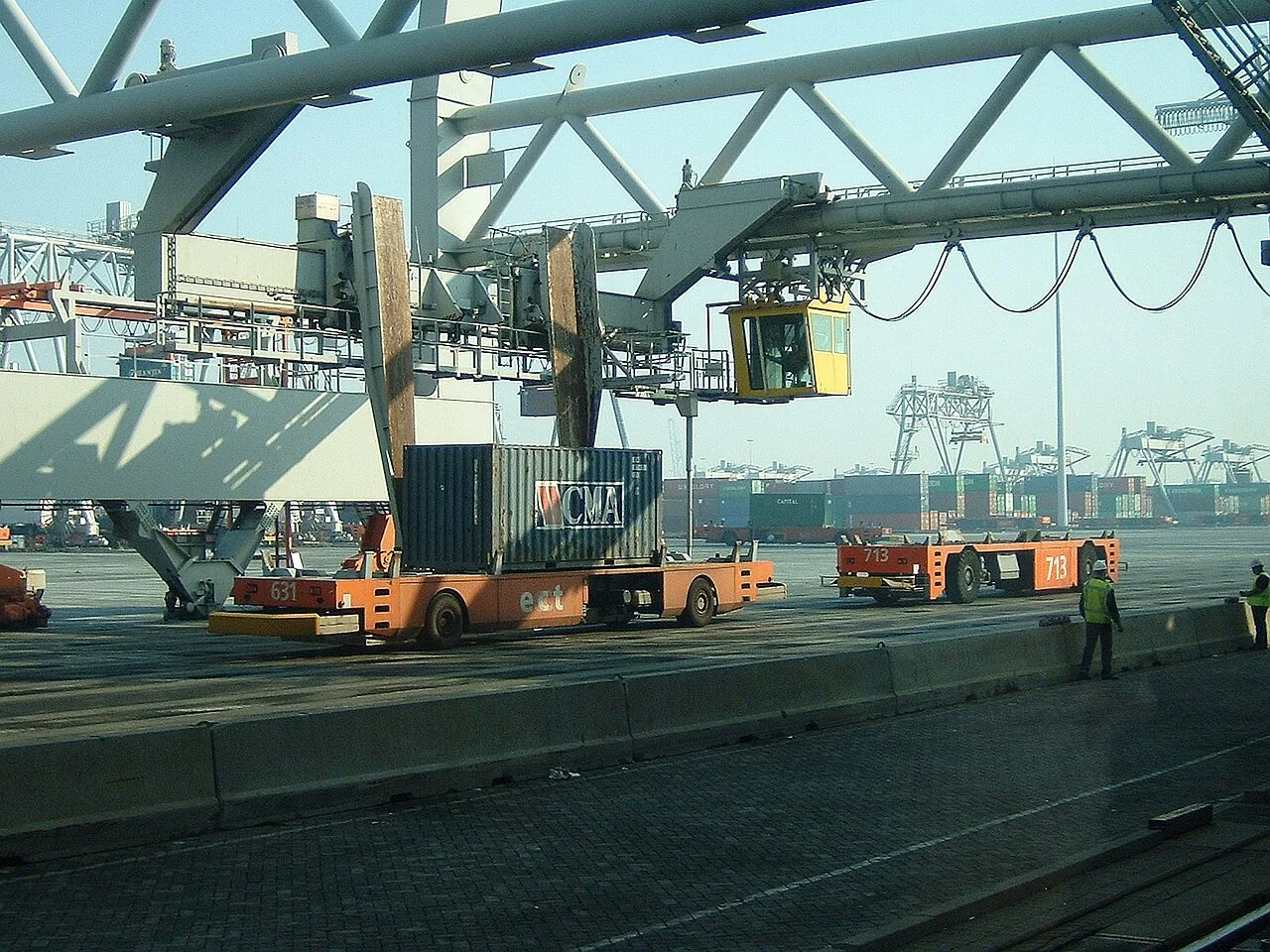
Europe Container Terminals, which operates two major container terminals at Rotterdam, pioneered the automation of port terminal operations. At the Delta terminal, containers are moved by automated guided vehicles — referred to internally as chariots — each of which carries a single container and navigates independently using a magnetic grid embedded in the terminal surface. When a container is placed on an AGV, infrared sensors identify it and direct the vehicle to its designated location within the terminal; the absence of human operators on the terminal floor earned it the informal name 'the ghost terminal.'
Unmanned Automated Stacking Cranes transfer containers between the AGVs and the stacking yard. The newer Euromax terminal, also operated within the port, advances this model further by eliminating the straddle carriers previously used for landside operations, streamlining the movement of boxes between quay and storage.
Smart technology and data infrastructure
The Port Authority employs an Internet of Things platform, cloud-based, to collect and process data from sensors distributed across the port. In May 2019 the port deployed an instrumented unit designated Container 42, which was sent on a two-year voyage specifically to gather operational and environmental data.
Urban reuse of historic port areas
Parts of the historic harbour predate the port's current industrial scale; the Leuvehaven, in the city centre, attracted its first museum visitor as early as 1892. As the port's operational focus shifted westward over successive decades, older harbour areas became available for other uses.
Frequently asked questions
Is Rotterdam still the world's largest port?
Rotterdam remains the largest seaport in Europe and the largest seaport in the world outside Asia. It held the title of the world's busiest port by annual cargo tonnage from 1962 until 2004, when Singapore overtook it, followed by Shanghai and other major Chinese ports. By 2017 Rotterdam ranked tenth globally by tonnage, and in 2020 it ranked tenth worldwide by container throughput in TEU.
How large is the Port of Rotterdam?
The port covers a total area of 105 square kilometres (41 square miles) and extends over a distance of 40 kilometres (25 miles). It encompasses five distinct port areas alongside three distribution parks and serves a European hinterland of more than 500 million consumers.
What is the Maasvlakte?
The Maasvlakte is a land-reclaimed extension of the port built into the North Sea on the southern side of the mouth of the Nieuwe Waterweg near Hook of Holland, completed during the 1970s. A second Maasvlakte was approved in principle in 2004, suspended by the Dutch Council of State in 2005 over environmental concerns, then re-approved on 10 October 2006, with construction targeted to start in 2008 and first vessel arrival aimed for 2013.
Who designed the Nieuwe Waterweg?
The Nieuwe Waterweg was designed by Dutch engineer Pieter Caland. The canal was intended to connect the Rhine and Meuse rivers directly to the North Sea, partly through excavation and partly through natural water-flow deepening, though the final section required manual digging. It was completed and opened in 1872.
How does the automated container handling work at Rotterdam?
At the Delta terminal, automated guided vehicles each carry one container and navigate via a magnetic grid built into the terminal surface, with infrared sensors identifying and routing each container to its designated position. Unmanned Automated Stacking Cranes then move containers between the AGVs and the stacking yard. The newer Euromax terminal extends this system by removing the need for straddle carriers on the landside, a development pioneered by Europe Container Terminals, which operates both facilities.
What is the deepest berth at Rotterdam, and which ships use it?
The EECV quay has a depth of 24 metres (78 feet) and was, until 2011, one of only two berths in the world able to handle the fully loaded iron ore carrier MS Berge Stahl, which draws 23 metres (75 feet). The vessel has just one metre of under-keel clearance at this quay, so it can only dock during a restricted tidal window, and must enter via the Eurogeul waterway. The Terminal of Ponta da Madeira in Brazil was the other berth capable of receiving the ship fully laden before Caofeidian in China opened a comparable facility in 2011.
How is freight moved from Rotterdam into Europe?
Goods leave Rotterdam by oceangoing vessel, river barge, rail and road. The rivers Rhine and Meuse provide natural access corridors into the continental hinterland. The Betuweroute, a dedicated freight railway connecting Rotterdam to Germany, had its Dutch section opened in 2007 after construction began in 2000.
What industries dominate the Port of Rotterdam?
The petrochemical industry is the port's single most important sector, with large oil refineries situated to the west of the city. General cargo transshipment is also central to the port's function, with Rotterdam serving as a transit hub for bulk commodities and other goods moving between continental Europe and global markets.
Sources
- Wikipedia: Port of Rotterdam — Factual basis of this entry