Intermodal freight transport
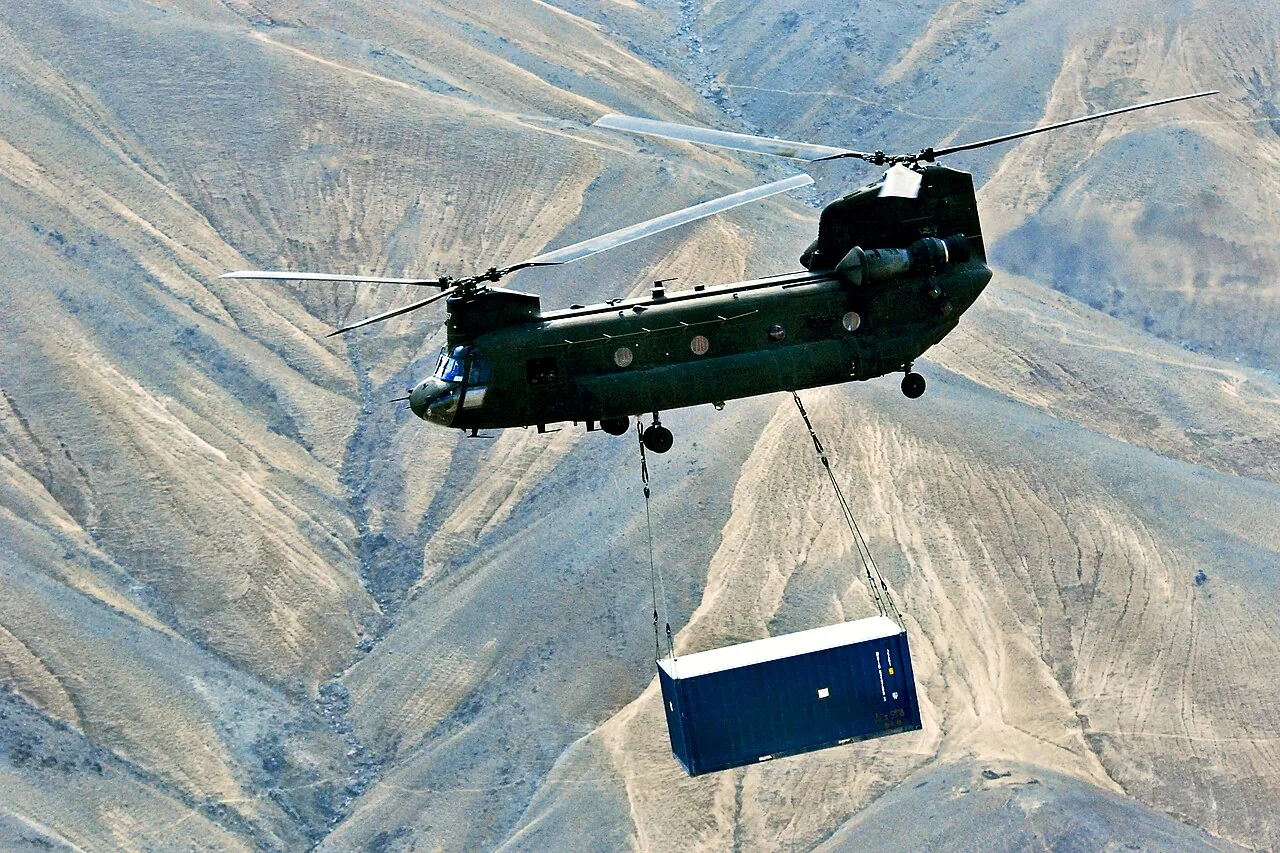
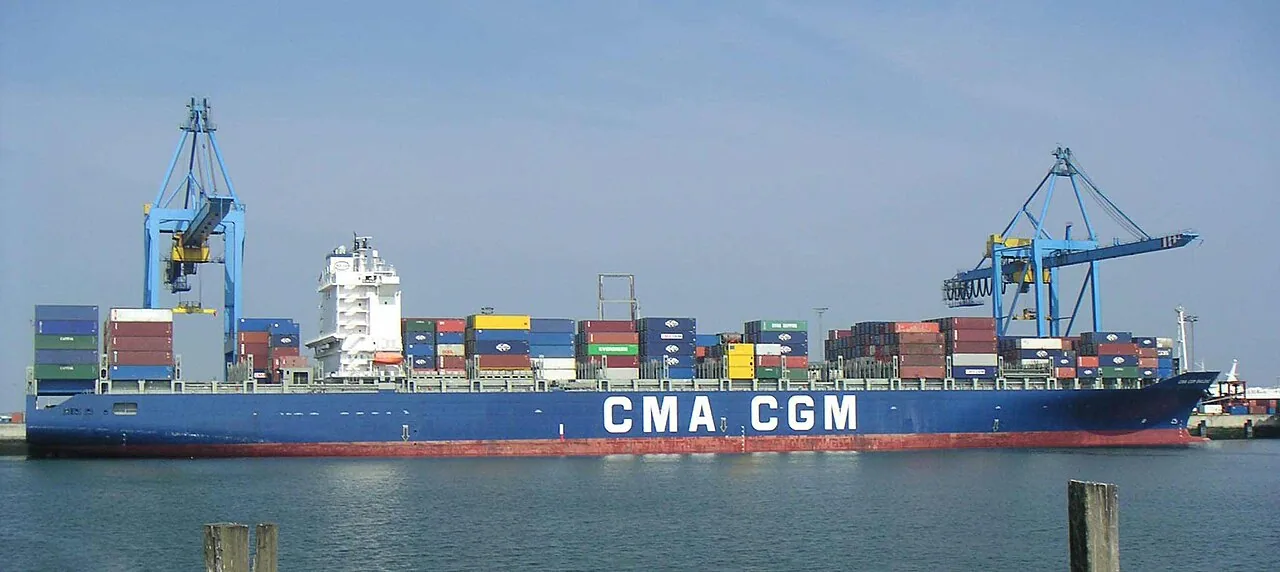
Intermodal freight transport is a system in which goods are carried using at least two different transport modes — such as road, rail, or sea — without the load unit itself being changed between those modes. The core principle is to combine the respective strengths of each mode within one integrated transport chain, improving economic performance by deploying the most suitable mode on each leg of a journey. The approach also reduces cargo handling, which in turn improves security, lowers the risk of damage or loss, and can accelerate transit times.
Research by Forkenbrock (2001) found that the external cost of an intermodal train per tonne-kilometre amounts to only 28 percent of the equivalent figure for a general freight truck, a gap that would be even wider had the cost of congestion been included in the calculation.
| Transport modes required | At least two (e.g. road, rail, sea, air) |
| Defining principle | Load unit unchanged across all modes |
| Key cost finding | Intermodal train external cost: 28% of road truck per tonne-km (Forkenbrock, 2001) |
| Earliest known containers | Coal containers, Bridgewater Canal, England, 1780s |
| First railway standardisation (UK) | Railway Clearing House, 1920s; containers 1.5 m or 3.0 m long |
| First door-to-door intermodal service (UK) | London, Midland & Scottish Railway, from 1928 |
| First piggyback rail service (North America) | Chicago Great Western railroad, 1936; Canadian Pacific Railway, 1952 |
| International container bureau founded | Bureau International des Containers et du Transport Intermodal (BIC), 1933 |
| ISO container standards issued | 1968–1970, based on U.S. Department of Defense specifications |
| World's first container ship | Clifford J. Rogers, built 1955, operated by White Pass & Yukon Route railway |
Definition and core principle
Intermodal freight transport requires the involvement of two or more distinct modes of transport — typically combinations drawn from road, rail, inland waterway, sea, and air — while keeping the load unit intact throughout the journey. The goods themselves are not handled directly when switching between modes; only the carrying unit is transferred. This continuity of the load unit is what distinguishes intermodal transport from simple multimodal arrangements.
The rationale for the system is that no single transport mode excels across all distances and geographies. By assigning each leg of a journey to the mode best suited to it, operators can achieve a more efficient overall chain. The European Commission identified intermodal freight transport in 2009 as a meaningful contribution toward a sustainable European transport sector, partly because it is less energy-intensive than road-only freight movement.
What are the main advantages of intermodal freight transport?
The most frequently cited advantage is a comparatively low level of external costs — costs borne by society rather than the carrier, such as pollution, noise, and infrastructure wear. The Forkenbrock (2001) figure illustrating that an intermodal train generates external costs equal to only 28 percent of those of a road freight truck per tonne-kilometre is widely referenced in policy discussions, and the true differential may be greater still because road congestion costs were excluded from that calculation.
Beyond external costs, intermodal solutions reduce the number of times cargo must be physically handled, which directly lowers the incidence of damage and loss and strengthens security. Faster transit is another benefit that results from reduced handling at transfer points. The main limitation arises over shorter distances, where the fixed time and cost of transferring a load unit between modes may erode the savings that accrue over longer hauls where road trucking would otherwise dominate.
Origins: canals and early railways
The practice of moving goods in discrete, transferable units predates the railway era. As early as the 1780s, coal was being shipped in containers — referred to at the time as loose boxes or tubs — on the Bridgewater Canal in England. These units were soon adopted on the early canal network and subsequently on early railways, enabling transfers between horse-drawn road vehicles and rail.
The first recorded use of wooden coal containers on a railway dates to the 1830s on the Liverpool and Manchester Railway. In 1841, Isambard Kingdom Brunel introduced iron containers specifically to move coal from the Vale of Neath to Swansea Docks. By the outbreak of the First World War, the Great Eastern Railway was operating a container-based service to trans-ship passenger luggage between trains and cross-Channel sailings via the port of Harwich.
Early standardisation and covered containers
The early twentieth century saw covered containers come into use, chiefly for furniture removals and general intermodal freight between road and rail. In the United States these units were known as lift vans and were in use from at least 1911. The absence of agreed dimensions, however, constrained the efficiency of the service and created commercial pressure for standardisation.
In the United Kingdom, the Railway Clearing House introduced standardised containers in the 1920s. These allowed both railway-owned and privately owned vehicles to be carried on standard container flatcars. By modern benchmarks they were small — either 1.5 or 3.0 metres in length — typically wooden, fitted with a curved roof, and unable to be stacked. From 1928, the London, Midland & Scottish Railway built on this standard to offer door-to-door intermodal road-rail services, though the British standard did not gain acceptance outside the United Kingdom.
Pallets became a significant logistics tool during the Second World War, when the United States military adopted them to assemble freight for rapid transfer between warehouses, trucks, trains, ships, and aircraft. Because individual items no longer needed to be handled separately, fewer personnel were required and loading times fell substantially.
Piggyback rail services
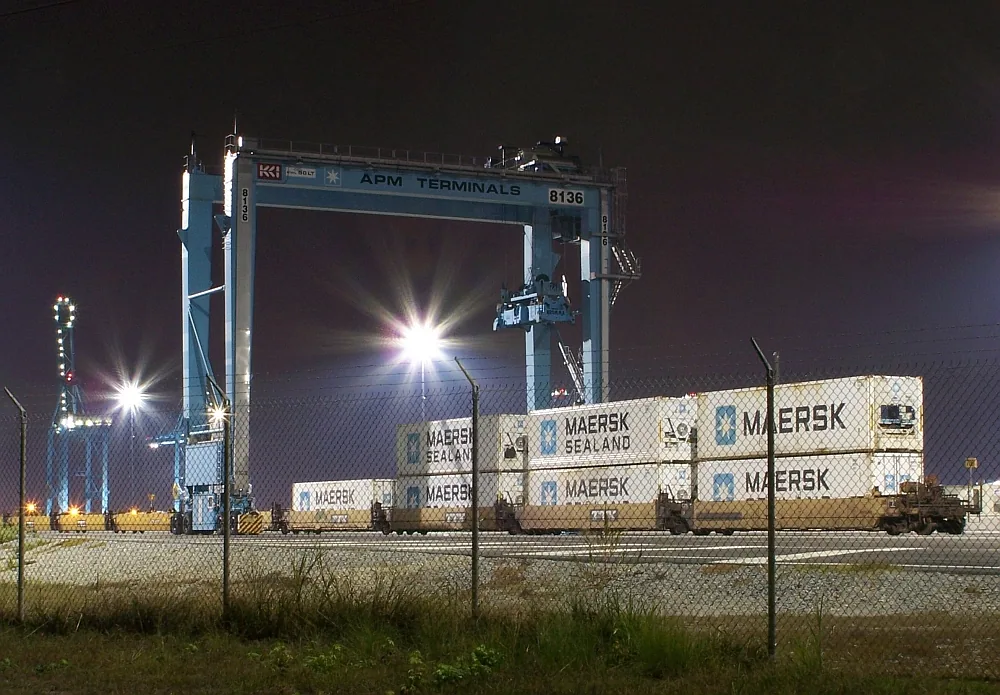
The practice of carrying truck trailers on railway flatcars — widely called piggyback transport — began in the United States before the Second World War. The Chicago Great Western, a Class I railroad, introduced the arrangement in 1936. In Canada, the Canadian Pacific Railway became the first major North American railway to offer the service on a substantial scale, doing so in 1952.
In the United Kingdom, the four main railway companies of the pre-nationalisation era offered comparable services using the standard Railway Clearing House containers, which could be craned directly onto the beds of road trucks. Private removal firms such as Pickfords operated similar services independently.
International Bureau for Containers and the path to ISO standards
In 1933, acting under the auspices of the International Chamber of Commerce, European interests established the Bureau International des Containers et du Transport Intermodal — known by its French initials, BIC. In June of that year, the BIC defined obligatory parameters for containers used in international traffic that were to be handled by lifting gear such as cranes or overhead conveyors. Under those regulations, containers were classified by form — closed or open — and by capacity — heavy or light. Heavy-type containers were required to have a maximum total weight of five tonnes and light-type containers a maximum of 2.5 tonnes, with a five percent tolerance permitted under the same conditions applied to wagon loads.
In April 1935 the BIC established a second set of standards covering European containers. These early international efforts laid the groundwork for more comprehensive standardisation that followed after the war. During the 1950s, the United States Department of Defense developed specifications for a new standardised steel intermodal container. The International Organization for Standardization subsequently issued globally applicable standards derived from those U.S. Department of Defense specifications between 1968 and 1970, creating the foundation for the modern intermodal container system.
When did the modern intermodal container system begin?
A pivotal moment in the history of containerisation came when the White Pass & Yukon Route railway acquired the Clifford J. Rogers, a vessel built in 1955 that is recognised as the world's first purpose-built container ship. The railway simultaneously introduced containers to its own rail operations in 1956, demonstrating for the first time an integrated sea-rail container chain.
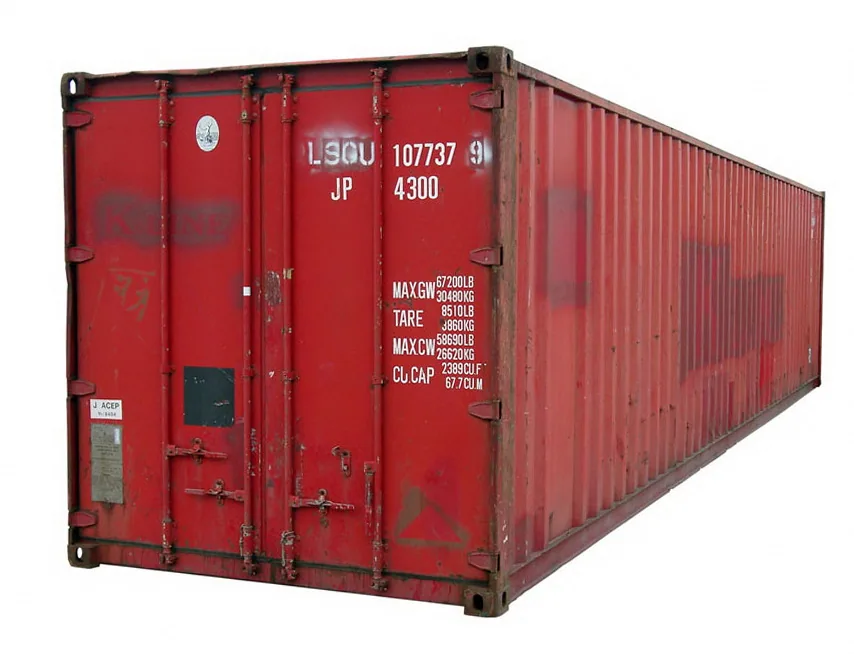
The steel intermodal container that emerged from U.S. Department of Defense specifications in the 1950s represented a qualitative break from earlier wooden and varied-dimension containers. When the ISO codified dimensions and corner-casting standards between 1968 and 1970, it enabled containers to move seamlessly across shipping lines, railways, and road vehicles worldwide — the technical precondition for the global container shipping industry that subsequently developed.
Policy context and market performance
Because intermodal freight transport is less energy-intensive than road-only freight, it has been promoted by policymakers at national and supranational levels as part of broader efforts to reduce the environmental footprint of the transport sector. The European Commission's 2009 position explicitly identified it as an important contribution to achieving a sustainable European transport sector.
Despite this policy support, the market share captured by intermodal freight transport has not grown as rapidly as policymakers anticipated. The gap between the potential identified in cost and emissions analyses and actual adoption reflects the complexity of building integrated chains across multiple operators, infrastructure types, and regulatory regimes.
Frequently asked questions
What is intermodal freight transport?
Intermodal freight transport is a system in which goods travel using at least two different transport modes — such as road and rail, or rail and sea — without the load unit being changed between those modes. The key distinction is that only the carrying unit is transferred at interchange points, not the cargo itself. This reduces handling and allows operators to use the most efficient mode on each leg of a journey.
How much cheaper are the external costs of intermodal rail compared with road trucks?
According to research by Forkenbrock published in 2001, the external cost of an intermodal train is only 28 percent of the external cost of a general freight truck when measured per tonne-kilometre. The actual difference may be larger, because the cost of road congestion was not included in that calculation. External costs are costs borne by society rather than the carrier, covering items such as pollution and infrastructure wear.
Where and when did intermodal freight transport originate?
The practice originated in eighteenth-century England, predating the railway era. Coal was being moved in discrete containers on the Bridgewater Canal as early as the 1780s, with transfers between canal boats and horse-drawn road vehicles. These loose boxes or tubs were subsequently adopted on early railways, with wooden coal containers recorded on the Liverpool and Manchester Railway in the 1830s.
Who built the world's first container ship?
The Clifford J. Rogers, built in 1955, is recognised as the world's first container ship. It was acquired by the White Pass and Yukon Route railway, which simultaneously introduced containers to its rail operations in 1956. This combination of ship and railway represented an early realisation of the integrated sea-rail container chain.
When were international container standards first established?
The Bureau International des Containers et du Transport Intermodal, established in 1933 under the International Chamber of Commerce, issued the first internationally agreed parameters for containers used in international traffic in June of that year, with a second European standard following in April 1935. The U.S. Department of Defense developed specifications for the modern steel intermodal container in the 1950s. The International Organization for Standardization then issued globally applicable standards based on those specifications between 1968 and 1970.
When did piggyback rail services — carrying truck trailers on flatcars — begin?
The Chicago Great Western, a Class I railroad in the United States, introduced piggyback transport in 1936, making it the first recorded operator of such a service. In North America, the Canadian Pacific Railway was the first major railway to roll out the service on a significant scale, beginning in 1952. In the United Kingdom, the main railway companies offered a functionally similar arrangement using standardised Railway Clearing House containers that could be craned onto road vehicles.
Why has intermodal freight transport not gained greater market share despite its advantages?
Although intermodal freight transport offers demonstrably lower external costs and energy intensity compared with road-only transport, its market share has grown less quickly than policymakers expected. Building an effective intermodal chain requires coordination across multiple operators, different infrastructure types, and varying national regulations, all of which add complexity. Additionally, over shorter distances the time and cost involved in transferring load units between modes can offset the savings that make the system attractive over longer hauls.
What role did the Second World War play in the development of intermodal logistics?
During the Second World War, the United States military made widespread use of pallets to assemble freight for rapid transfer among warehouses, trucks, trains, ships, and aircraft. Because cargo no longer needed to be handled piece by piece at each transfer point, fewer personnel were required and loading times were significantly reduced. This large-scale military application demonstrated the operational benefits of standardised load units and influenced subsequent civilian logistics practice.
Sources
- Wikipedia: Intermodal freight transport — Factual basis of this entry